How Is Fault Determined in a California Car Accident? (2026)
- Tom Feher, Esq.
By Thomas Feher, Esq.|Founder, Feher Law APC|50+ jury trials|$170M+ recovered|Super Lawyers 2022-2026|Avvo 10.0
Fault in a California car accident is determined by combining the police report, witness statements, vehicle damage patterns, traffic-camera or surveillance footage, event-data-recorder downloads, and applicable Vehicle Code sections (22350 basic speed law, 21453 red lights, 22107 unsafe lane change, 21703 following too closely). California’s pure comparative fault rule (from Li v. Yellow Cab, with Civil Code 1431.2 apportioning non-economic damages) alongside the ordinary-care duty in Civil Code 1714 allows recovery even when you are partially at fault, reduced by your percentage. Our practice routinely shifts insurer-assigned fault by 20 to 50 percent using EDR and video evidence. CCP 335.1 gives you two years to sue. This guide explains every fault-shifting tool.
Key Takeaways
- The police report does not decide fault. It is admissible evidence and it carries weight with insurers, but it is not binding on a judge, a jury, or even the carrier. Officers often arrive after the collision and work from statements rather than observation.
- A Vehicle Code violation creates a presumption of negligence. The sections that do most of the work are Vehicle Code 22350 (basic speed law), Vehicle Code 21453 (red lights), Vehicle Code 22107 (unsafe lane change), Vehicle Code 21703 (following too closely) and Vehicle Code 21801 (left turn yield). The presumption can be overcome, but it shifts the burden meaningfully.
- Being partly at fault does not end the claim. California uses pure comparative fault, so even a driver 90% at fault recovers 10% of their damages. Civil Code 1714 sets the ordinary-care duty and Civil Code 1431.2 apportions the non-economic damages by each defendant’s own share.
- Fault percentages move with evidence, not argument. Event data recorder downloads, traffic camera and surveillance footage, damage patterns and canvassed witnesses are what shift an insurer’s initial assignment, commonly by 20 to 50 percent in our cases.
- Feher Law handles these cases on full contingency. You pay nothing unless we win.
Table of Contents
How Feher Law Protects Your Rights After a Car Accident
We represent clients throughout the fault determination process, from the initial insurance investigation through litigation if necessary. Our team gathers evidence, interviews witnesses, and works with accident reconstruction experts to establish what truly happened.
California’s comparative negligence system means even drivers partially at fault can recover compensation. We’ve secured millions for clients, including a $4.2 million settlement for a Long Beach client after a rear-end collision with a back injury. Insurance companies often try to shift blame to reduce payouts – we stop them.
Our bilingual team serves clients in English and Spanish, and we operate on contingency fees – 33% before litigation, 40-45% during litigation, and 45-50% at trial – meaning we never charge unless we win your case.
California's Fault-Based Insurance System
California operates under a fault-based system where the driver who caused the accident bears financial responsibility for all resulting damages. This differs from no-fault states, where each driver’s insurance covers their own injuries regardless of who was at fault.
⚖️ Under California law, the at-fault driver’s insurance must compensate injured parties for medical expenses, lost wages, property damage, and pain and suffering. If the at-fault driver lacks sufficient insurance, victims may pursue compensation through their own uninsured or underinsured motorist coverage.
The fault-based system creates strong incentives for thorough investigations. Insurance companies scrutinize every detail to minimize their liability. We conduct our own independent investigations to counter insurer tactics and protect your right to full compensation.
How California's Comparative Negligence Law Affects Your Case
California follows a pure comparative negligence rule, meaning multiple parties can share fault for an accident. Even if you’re partially responsible, you can still recover compensation reduced by your percentage of fault.
If you’re awarded $100,000 in damages but found 20% at fault, you’ll receive $80,000. The court reduces your recovery by your degree of responsibility, but partial fault doesn’t eliminate your right to compensation entirely.
California’s approach recognizes that accidents often involve mistakes by multiple parties and ensures proportional accountability.
Insurance adjusters frequently exploit comparative negligence by exaggerating your role in causing the accident. They scrutinize every statement you make, looking for admissions that increase your fault percentage.
We regularly push back when insurance companies exaggerate our clients’ share of fault. By conducting independent investigations and managing all insurer communications, we help prevent these tactics from unfairly reducing compensation.
If you’re looking for a Huntington Beach car accident lawyer, we can help you understand your rights and next steps with a free consultation.
Key Evidence Used to Determine Fault in California
Fault determination relies on objective evidence gathered immediately after the collision and through subsequent investigation. The quality and completeness of this evidence often decides whether you recover full compensation or face reduced damages.
Police Reports and Officer Assessments
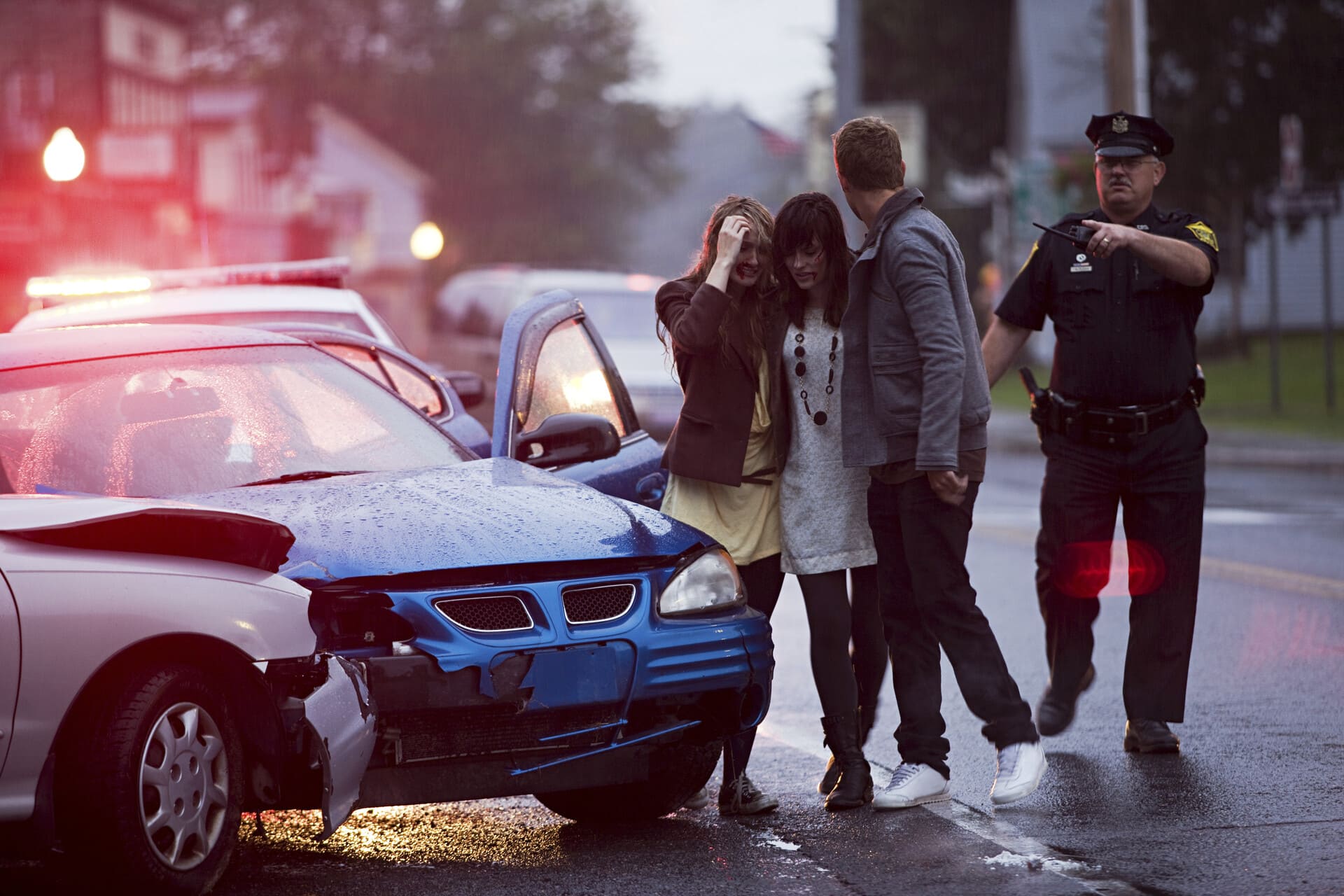
Law enforcement officers document accident scenes, interview drivers and witnesses, and issue citations for traffic violations. Their reports typically include diagrams showing vehicle positions, road conditions, and the officer’s preliminary fault assessment.
California courts allow police reports to be considered as evidence, but they are not definitive proof of fault. Officers may arrive after a collision and rely on statements rather than firsthand observation, which means reports do not always reflect the full picture. Additional evidence, such as physical damage patterns or witness accounts, can be critical in clarifying how an accident actually occurred.
Physical Evidence From the Accident Scene
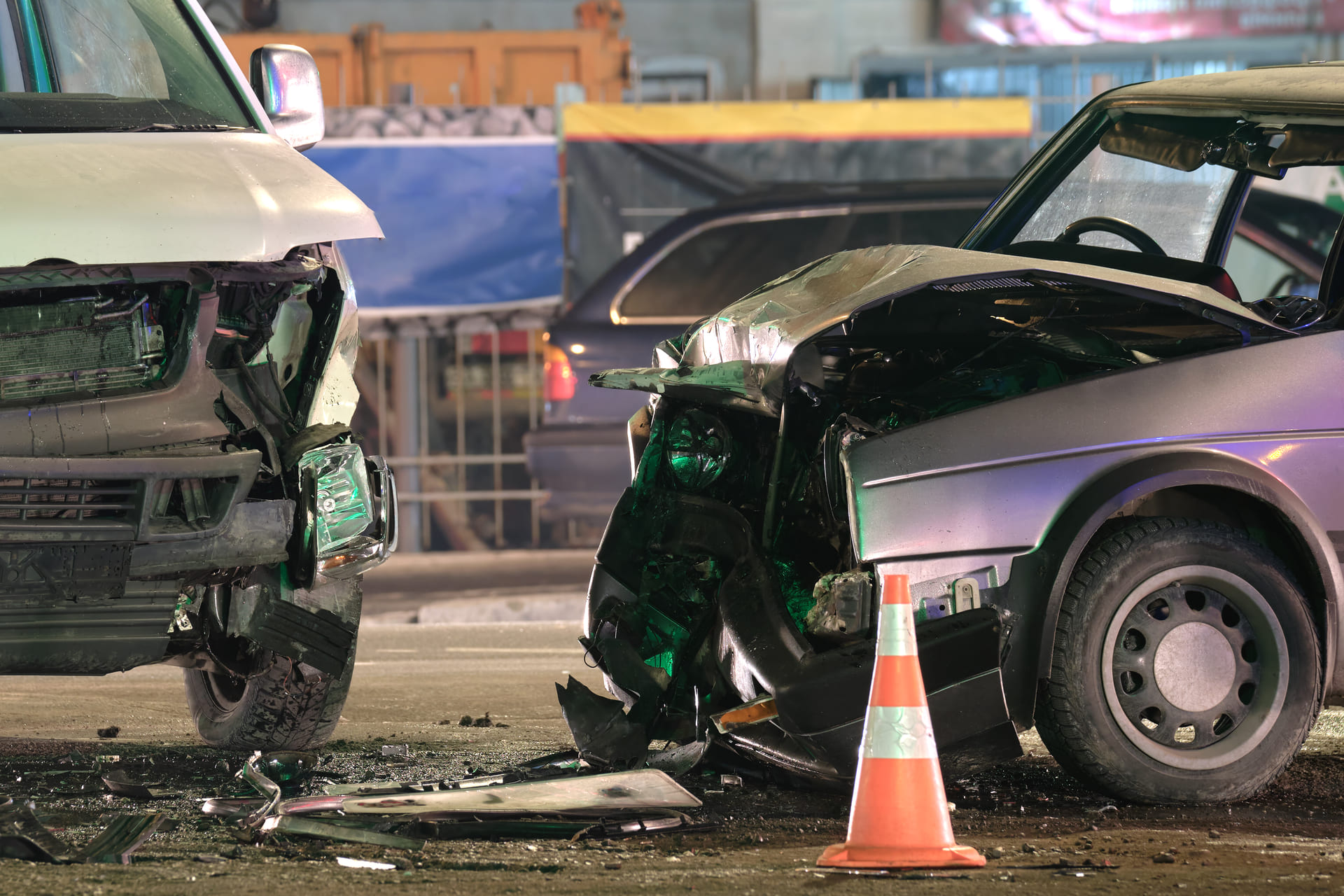
Vehicle damage patterns, skid marks, debris fields, and final resting positions all tell the story of how a collision occurred. Accident reconstruction experts analyze this evidence to determine speeds, impact angles, and driver actions immediately before the crash.
Photographs and videos taken at the scene preserve critical details that fade within hours as vehicles are towed and roadways are cleared.
We guide clients on documenting everything visible from multiple angles, including traffic signals, road signs, weather conditions, and sight obstructions.
Witness Statements and Independent Observations
Neutral third-party witnesses often provide the most credible accounts of how an accident unfolded. Unlike drivers with financial stakes in the outcome, bystanders have no incentive to misrepresent what they observed.
Witness credibility varies based on their vantage point and attentiveness. Someone who stopped at a red light facing the intersection provides stronger testimony than a pedestrian who heard brakes screeching but didn’t see the impact.
We interview all potential witnesses early, before memories fade or parties relocate, ensuring we capture the strongest evidence for your case.
Traffic Law Violations and Right-of-Way Rules
Citations for speeding, running red lights, illegal turns, or other violations create strong presumptions of fault. California Vehicle Code violations directly establish negligence when the violated statute was designed to prevent the type of harm that occurred.
The California Department of Motor Vehicles enforces traffic laws and provides driver education on safe driving practices. We use these official standards to demonstrate how the other driver’s violations caused your injuries and why you deserve full compensation.
Contact us at (424) 622-3350 to discuss how traffic violations may affect fault determination in your case.

Common Accident Scenarios and Typical Fault Assignments
Certain collision types follow predictable fault patterns based on traffic laws and driver responsibilities. We help you recognize when an insurer is attempting to unfairly shift blame.
Rear-End Collisions
In California, the following driver is frequently found at fault in rear-end accidents because drivers must maintain a safe following distance. However, fault is not automatic, and exceptions can apply when the lead vehicle acts unpredictably or unavoidable mechanical issues contribute to the crash.
💡 Hypothetical Scenario: A driver stops suddenly for a yellow light at an intersection. The vehicle behind them cannot stop in time and causes a rear-end collision. While the following driver typically bears fault for insufficient following distance, investigations might reveal the lead driver’s brake lights were malfunctioning, shifting some liability.
Insurance companies frequently argue that the lead driver stopped too suddenly or created a hazardous situation in rear-end collisions. We conduct careful analysis of the evidence to evaluate these claims and determine how fault should be fairly assigned.
📌 Additional reading: who is at fault in a rear-end accident
Left-Turn Accidents
Drivers turning left must yield to oncoming traffic under the California Vehicle Code Section 21801. They bear fault unless they can prove the oncoming driver was speeding excessively, ran a red light, or otherwise violated traffic laws.
Determining fault requires reconstructing the traffic signal timing and the oncoming vehicle’s speed. Accident reconstruction experts use skid mark lengths, vehicle damage severity, and witness statements to calculate whether the oncoming driver could have stopped safely.
We coordinate with these experts to build compelling evidence for your claim.
Intersection Collisions
Right-of-way violations cause most intersection accidents. California law establishes clear priority rules at controlled and uncontrolled intersections, with drivers who violate these rules bearing fault.
Fault determination often depends on traffic signal timing, witness statements, and physical evidence. When drivers dispute who had the right of way at a green light or a four-way stop, video footage from nearby businesses or traffic cameras can be especially persuasive. Obtaining and reviewing this type of evidence can reveal details that were overlooked early in an insurance investigation and may significantly affect how fault is ultimately assessed.
📌 Additional reading: 3-car collision: who is at fault
How Insurance Companies Investigate and Assign Fault
Insurance adjusters conduct their own investigations to determine liability, often reaching conclusions that minimize their company’s financial exposure. We help you avoid statements that unfairly increase your assigned fault percentage.
The Insurance Adjuster's Investigation Process
Adjusters review police reports, interview all parties, examine vehicle damage, and sometimes consult accident reconstruction specialists. Their goal is building a defensible fault determination that withstands potential litigation while limiting payout amounts.
Insurance adjusters typically manage a high volume of claims, which can limit the time spent investigating any single accident. As a result, important details may be missed, such as uncontacted witnesses or available video footage. A more thorough, independent investigation can uncover overlooked evidence and provide a clearer picture of how the collision actually occurred.
Recorded Statements and Their Impact
Insurance companies request recorded statements within days of an accident, before you’ve consulted an attorney or fully understood your injuries. They phrase questions to elicit responses that support higher fault percentages for claimants.
Questions designed to trap claimants include asking about your speed, whether you saw the other vehicle before impact, and whether you could have done anything differently. We advise clients to politely decline recorded statements until we’ve investigated the accident ourselves.
California law gives you the right to pause before giving recorded statements to insurance companies. If you’re unsure how to protect yourself or what to say next, speaking with our team can help you make informed decisions and avoid mistakes that could affect your claim.
Disputing Incorrect Fault Determinations
Insurance companies aren’t neutral investigators – they’re profit-driven entities incentivized to minimize payouts. When adjusters assign unfair fault percentages, we challenge their conclusions with independent investigations and expert analysis.
Our process includes:
- Hiring accident reconstructionists who create detailed collision models
- Obtaining traffic camera footage and business security recordings
- Interviewing witnesses that the insurance company overlooked
- Consulting with medical experts who connect your injuries to the other driver’s negligence
Initial appearances can be deceiving. We conduct the investigation necessary to prove what actually happened and hold the responsible party accountable.
If an insurance company has assigned you unfair fault percentages, contact us for a free case evaluation.
Legal and Financial Consequences of Fault Determination
Being found at fault carries serious implications beyond just the current accident. We help you fight unfair fault assignments to protect both your immediate recovery and your long-term financial security.
Impact on Insurance Premiums
Related Practice Areas
Feher Law represents California clients in the following practice areas relevant to this article:
Related Feher Law Case Results
Real California verdicts and settlements our firm has obtained in similar cases:
- $4.2M Car Accident – Back Injury Settlement #2
- $2M Car Accident – Spine Injury Settlement #1
- $1.6M Car Accident – Neck Injury Settlement #1
Past results do not guarantee similar outcomes. Each case is unique.
At-fault accidents often lead to increased insurance premiums that can affect drivers for several years. While California regulates how insurers use accident history in rate calculations, insurers may still raise premiums or restrict coverage following at-fault determinations, especially when multiple accidents are involved.
Addressing the fault early can help limit the long-term financial impact on your insurance costs.
Potential Liability for Damages
Liability in a car accident depends on how fault is ultimately assigned. In California, the party found responsible may be liable for economic damages such as medical expenses and lost income, as well as non-economic damages like pain and suffering, and most car accident cases are not subject to damage caps.
Insurance coverage and fault percentages play a major role in determining financial exposure. When responsibility is disputed, carefully evaluating the evidence and how fault is allocated can significantly affect both compensation and potential liability.
Our role is to clarify what actually happened, challenge unsupported fault allegations, and protect your interests – whether that means pursuing compensation or limiting unfair responsibility.
Criminal Charges in Serious Accidents
Fault determinations can trigger criminal investigations when accidents involve fatalities, serious injuries, or suspected impairment. The Los Angeles County Superior Court handles thousands of vehicular manslaughter and DUI cases annually, many originating from traffic accident investigations.
Criminal charges carry penalties beyond civil liability, including jail time, license suspension, and permanent criminal records. We work closely with criminal defense attorneys when our clients face both civil and criminal exposure, ensuring their rights are protected throughout both proceedings.
Critical Steps to Protect Your Rights After an Accident
The actions you take immediately after a collision significantly impact fault determinations and your ability to recover fair compensation. We guide clients through each of these protective steps.
1. Document Everything at the Accident Scene
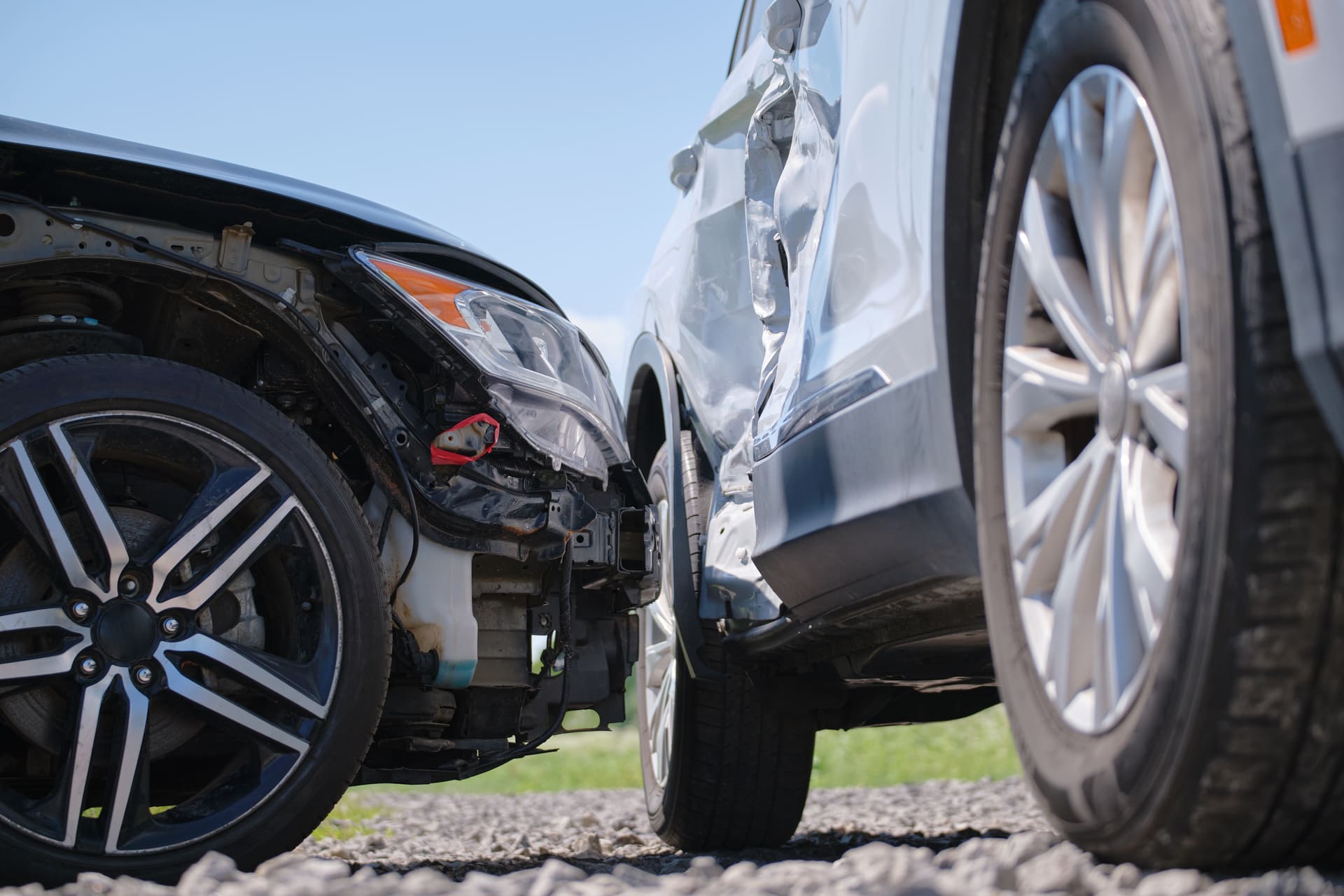
Take photographs and videos of all vehicles from multiple angles, showing damage patterns, license plates, and positions on the roadway. Capture:
- Traffic signals and road signs
- Weather conditions
- Skid marks and debris
- Final vehicle positions
Exchange information with other drivers, including names, addresses, phone numbers, insurance details, and license plate numbers. Avoid discussing fault or apologizing – even saying “I’m sorry” can be used as evidence against you later.
2. Obtain and Preserve Evidence
Request contact information from witnesses and ask them to provide brief written statements about what they observed. Independent witness accounts often provide the strongest evidence in disputed fault cases.
Note the location of nearby businesses with security cameras that might have captured the accident. Surveillance footage typically gets overwritten within 7-30 days. We move quickly to preserve these recordings through formal requests or subpoenas, ensuring critical evidence isn’t lost.
3. Seek Immediate Medical Evaluation
Visit an emergency room or urgent care facility even if you feel fine. Many serious injuries, including traumatic brain injuries, internal bleeding, and spinal cord damage, don’t cause immediate symptoms. Delayed medical treatment creates opportunities for insurance adjusters to argue your injuries weren’t caused by the accident.
Medical records create timelines connecting your injuries directly to the collision. We’ve seen insurers deny claims when clients waited even 24 hours before seeking treatment, arguing the injuries must have resulted from subsequent events. We help you build the medical documentation necessary to prove causation.
4. Contact an Attorney Before Making Statements
Insurance adjusters will contact you within hours of an accident, requesting recorded statements before you’ve consulted legal counsel. Politely decline these requests and direct them to your attorney once you’ve retained our representation.
California law protects your right to legal counsel before making statements that could affect your legal rights. Insurance companies know that unrepresented claimants often make damaging admissions during these early calls.
We handle all communications with insurers, protecting you from tactics designed to reduce your compensation.
Contact us immediately after a car accident to protect your rights during the critical early investigation period.
What Not to Say After a Car Accident
Your statements immediately after a collision can undermine your claim even when the other driver was clearly at fault. We advise clients on protecting themselves from insurance tactics that use innocent comments against them.
Avoid Admitting Fault or Apologizing
Never say “I’m sorry,” “It was my fault,” or “I didn’t see you” at the accident scene or in subsequent conversations with insurance adjusters. California’s comparative negligence system means these statements directly reduce your recoverable compensation.
Even seemingly innocent comments like “I should have been paying more attention” or “I was in a hurry” create ammunition for defense attorneys arguing you bore primary responsibility. We teach clients to stick to factual observations without interpreting what caused the accident.
Don't Speculate About What Happened
Limit your statements to what you directly observed without guessing about vehicle speeds, driver intentions, or contributing factors. Speculation often contradicts physical evidence revealed during an investigation, damaging your credibility.
💡 Hypothetical Scenario: A driver tells police they think they were traveling about 40 mph before impact, but accident reconstruction later proves their actual speed was 30 mph. This discrepancy allows the other driver’s attorney to argue the witness is unreliable, potentially undermining otherwise strong testimony.
We guide you on providing accurate, limited statements that protect your interests while complying with legal obligations.
💬 Have Questions About Your Case?
Get a free, confidential consultation with a California attorney. No fees unless we win.
Avoid Discussing the Accident on Social Media
Insurance companies routinely monitor claimants’ social media accounts for posts contradicting injury claims or suggesting partial fault. Even innocent photos showing you engaged in activities can be used to argue your injuries aren’t as serious as claimed.
Set all social media accounts to private and avoid posting anything about the accident, your injuries, or your activities during the claims process. We advise clients on protecting their online presence throughout the duration of their case to prevent insurance defense attorneys from using casual posts against them.
How We Build Strong Cases in Disputed Fault Scenarios
When insurance companies assign unfair fault percentages, we conduct independent investigations to uncover the truth and maximize your compensation. Our systematic approach has helped us recover over $170 million for California accident victims.
1. Independent Accident Reconstruction
We work with certified accident reconstructionists who analyze physical evidence to determine vehicle speeds, impact angles, and driver actions immediately before collisions. These experts create detailed reports and demonstrative exhibits that make complex evidence understandable to insurance adjusters, mediators, and juries.
Accident reconstruction proves particularly valuable in disputed intersection cases where both drivers claim they had the right-of-way. By analyzing skid mark lengths, vehicle damage patterns, and final positions, experts can determine signal timing and which driver violated traffic laws.
We coordinate with these specialists to build the strongest possible case for your compensation.
2. Witness Investigation and Interviewing
Our investigators locate and interview all potential witnesses, not just those identified in police reports. We’ve found witnesses by canvassing nearby businesses, reviewing social media posts from the accident location, and identifying vehicle occupants not initially interviewed by police.
Professional witness interviews elicit more detailed information than police reports typically contain. We ask specific questions about sight lines, traffic patterns, driver behaviors, and environmental conditions that help establish fault with precision.
Our thorough approach often uncovers testimony that transforms weak cases into strong claims.
3. Surveillance and Video Evidence Recovery
We immediately request surveillance footage from nearby businesses, traffic cameras, and dashboard cameras from other vehicles. This process requires quick action because most systems automatically overwrite recordings after short retention periods.
Educational institutions like UCLA conduct research on transportation safety that informs best practices in accident investigation. When available, video footage often becomes the most persuasive evidence in disputed liability cases.
We often find that video evidence is overlooked or assumed to be unavailable during early insurance investigations. By taking additional steps to identify and review potential footage, we work to ensure fault is evaluated using the most complete information available.
4. Medical Documentation Linking Injuries to the Collision
Strong medical evidence establishes causation, proving your injuries resulted from the accident rather than pre-existing conditions or subsequent events. We work with your treatment providers to ensure medical records clearly document injury mechanisms consistent with the collision forces.
Insurance companies frequently argue that pre-existing conditions caused claimants’ symptoms, not the accident. We counter these defenses by obtaining detailed medical opinions explaining how the trauma aggravated or accelerated underlying conditions, establishing the accident as a substantial contributing factor.
Our relationships with medical experts help us build the documentation necessary to prove your full damages.
When Partial Fault Doesn't Eliminate Your Recovery
California’s pure comparative negligence system, adopted in Li v. Yellow Cab Co. (1975) 13 Cal.3d 804, allows you to recover compensation even when you’re predominantly at fault. We help clients pursue legitimate claims that other states’ laws would bar.
Recovering Damages When You're 50% or More at Fault
Unlike modified comparative negligence states, where being 50% or more at fault eliminates recovery, California allows you to collect reduced damages regardless of your fault percentage. Even if you’re 75% responsible, you can recover 25% of your total damages from the other driver.
This distinction matters tremendously in serious injury cases. If your damages total $400,000 and you’re 60% at fault, you can still recover $160,000 – a life-changing amount that states with modified comparative negligence would deny entirely.
We help clients maximize recovery even when they share responsibility for an accident.
How Courts Calculate Fault Percentages
Juries (or judges in bench trials) assign fault percentages after hearing all evidence and arguments from both sides. They consider each party’s conduct against the standard of care expected from reasonable drivers under similar circumstances.
Factors influencing percentage assignments include:
- Traffic law violations by each driver
- Attentiveness and sobriety at the time of the collision
- Speed relative to conditions and legal limits
- Proper maintenance of vehicles, including brakes, tires, and lights
- Responsiveness to changing traffic conditions
We present evidence and arguments designed to minimize your fault percentage even when you share some responsibility. Small percentage differences translate to substantial changes in your recovery amount, so our thorough preparation makes a real financial difference.
Strategic Considerations in Shared Fault Cases
| Fault Percentage | Your Damages | Your Recovery | Other Driver’s Recovery |
| 0% Your Fault | $500,000 | $500,000 | $0 |
| 20% Your Fault | $500,000 | $400,000 | Their Damages × 20% |
| 50% Your Fault | $500,000 | $250,000 | Their Damages × 50% |
| 75% Your Fault | $500,000 | $125,000 | Their Damages × 75% |
If you were partially at fault but suffered serious injuries, contact us to discuss your recovery options under California’s comparative negligence law.
Why Feher Law's Approach Gets Better Results
We’ve recovered over $170 million for California accident victims by combining thorough investigation, aggressive negotiation, and trial-ready preparation. Our success stems from treating clients as extensions of our family and fighting tirelessly for maximum compensation.
Bilingual Service in English and Spanish
Our team communicates fluently in English and Spanish, ensuring clients fully comprehend the legal process and can participate meaningfully in decision-making. Language barriers shouldn’t prevent accident victims from accessing quality legal representation.
We’ve found that clients who communicate in their preferred language provide more detailed accident accounts, helping us build stronger cases. Our bilingual capabilities also help us interview Spanish-speaking witnesses who might not feel comfortable providing statements to English-only investigators.
Proven Track Record in Complex Liability Cases
Our case results demonstrate our ability to overcome insurance company fault defenses through meticulous investigation and compelling presentation. When adjusters know we’re willing and prepared to try cases, they offer fairer settlements to avoid courtroom risk.
Significant results include:
- $22.7 million bench verdict in elder abuse, fraud, wills, and probate case in Los Angeles
- $7 million civil rights settlement in Los Angeles
- $4.2 million auto crash settlement with back injury in Long Beach
- $5 million slip and fall verdict involving knee and low back injury in Van Nuys
No Fees Unless We Win Your Case
We handle all car accident cases on contingency fee arrangements, meaning you pay nothing upfront and we only collect fees from your settlement or verdict. This structure aligns our interests with yours – we succeed only when you do.
Our contingency rates are 33% if we settle before litigation, 40-45% during litigation, and 45-50% at trial. These percentages cover all attorney time and case costs, ensuring you receive expert representation regardless of your current financial situation. We invest in your case because we believe in your right to compensation.

Your Path Forward After a California Car Accident Starts With Feher Law
Fault determination shapes every aspect of your car accident claim, from settlement negotiations to trial verdicts. We know California’s comparative negligence system and challenge unfair liability assignments to secure maximum compensation for our clients.
We’ve spent years mastering the complexities of fault determination through hundreds of cases across California. That experience works for you from your first phone call through final resolution. We handle all communications with insurance companies, ensuring they treat you fairly and respect your rights throughout the claims process.
Clients truly become an extension of our family. We provide the same level of care and attention we’d want for our own loved ones, fighting tirelessly to protect your interests and secure the justice you deserve. Insurance adjusters work for shareholders, not accident victims – but we work exclusively for you.
Contact Feher Law at (424) 622-3350 for a free consultation about your California car accident case. We’ll review how fault determinations affect your claim and explain your options for recovery under California law.
Frequently Asked Questions
How long do I have to change the fault determination after a California car accident?
Fault determinations can be challenged throughout the claims process and even during litigation when new evidence surfaces. Insurance companies issue initial assessments within 15-30 days, but these aren’t final. California’s two-year statute of limitations gives you that full period to investigate and present evidence supporting your position.
What should I do if the police report says I caused the accident, but I didn't?
Police reports are admissible evidence but not definitive proof of fault. Officers sometimes reach conclusions based on incomplete information or statements made under stress. We challenge incorrect reports by presenting witness testimony, expert reconstruction, video footage, and physical evidence that the officer didn’t consider, then prepare detailed rebuttals explaining why the assessment was mistaken.
Can the other driver sue me if they got a ticket at the accident scene?
Traffic citations create strong presumptions of fault, but don’t automatically eliminate your liability under comparative negligence. Juries can still assign you partial responsibility even when the other driver received tickets. However, citations significantly strengthen your position because they establish that the other driver violated traffic laws designed to prevent your exact type of harm.
What happens when both drivers claim they had the green light at an intersection?
Conflicting signal accounts require investigation beyond driver statements. We obtain traffic signal timing records from municipal engineering departments, request surveillance footage from businesses and traffic cameras, interview independent witnesses, and consult reconstruction experts who determine signal status from damage patterns and speeds. Ambiguous evidence typically results in shared fault percentages.
How does damage that was already on my car affect who's at fault in my current accident?
Pre-existing damage complicates fault determination because separating old from new collision damage becomes challenging. Insurance companies argue that claimed damage existed beforehand to reduce liability. We obtain pre-accident photos from vehicle history reports, prior repair estimates, or your documentation showing your vehicle’s condition before the collision. Auto body experts distinguish fresh damage from old damage.
Estimate your case value: Use our free California Personal Injury Settlement Calculator for a quick estimate of what your case could be worth, or speak directly with a Torrance personal injury lawyer for a personalized review.
Last reviewed by Thomas Feher, Esq. – October 2026
How is fault determined in a California car accident?
Fault is determined by gathering evidence from the CHP or local police report, witness statements, photos, dash cam and surveillance footage, and physical evidence at the scene. California follows pure comparative fault, meaning each party can recover damages reduced by their own percentage of fault. Even a driver 90 percent at fault can recover 10 percent of their damages.
What Vehicle Code sections most often establish fault?
The most common include Vehicle Code 22350 (basic speed law), 22107 (unsafe lane change), and 21801 (left turn yield). Violation of a Vehicle Code section creates a presumption of negligence under California law, often called negligence per se. That presumption can be overcome but it shifts the burden meaningfully.
Does the police report decide who is at fault?
No. The CHP or police report is evidence and carries weight with insurers, but it is not binding on a judge, jury, or even the insurance carrier. We routinely overcome unfavorable police reports with reconstruction experts, additional witness statements, and physical evidence. Conversely, a favorable report is not the end of the analysis either.
What if both drivers share some of the blame?
California's pure comparative fault rule lets you recover even if you were partly at fault. If your total damages are $100,000 and you are 30 percent at fault, you recover $70,000. There is no bar at 50 percent like in some other states, which is why California is one of the more plaintiff-favorable jurisdictions on fault.
How long do I have to file a car accident lawsuit?
California Code of Civil Procedure 335.1 sets a two-year deadline from the date of the accident for personal injury claims. Property damage only has a three-year deadline under CCP 338. If a government vehicle is involved, Government Code 911.2 requires a written claim within six months.
Can I still recover if I was rear-ended but not wearing a seatbelt?
Yes, although your damages may be reduced. California's seatbelt defense allows insurers to argue that some portion of your injuries was caused by not wearing a belt. The reduction usually applies only to injuries the belt would have prevented. The rear-ending driver remains liable for the underlying crash.