
California Amputation & Loss of Limb Attorneys
| Free Consultation

- Top Rated Trial Firm
- Over $200 Million Recovered For Clients
- No Fees Unless We Win
FEATURED ON

















Recent California Recovery
$14.6M jury verdict
Simone v. Estate of Bruce Jameson · California personal injury wrongful death verdict tried by Feher Law, APC
Feher Law, APC
Founding Attorney, Feher Law APC
60+ jury trials to verdict · $200M+ recovered
Super Lawyers 2022-2026 · Best Law Firms 2025
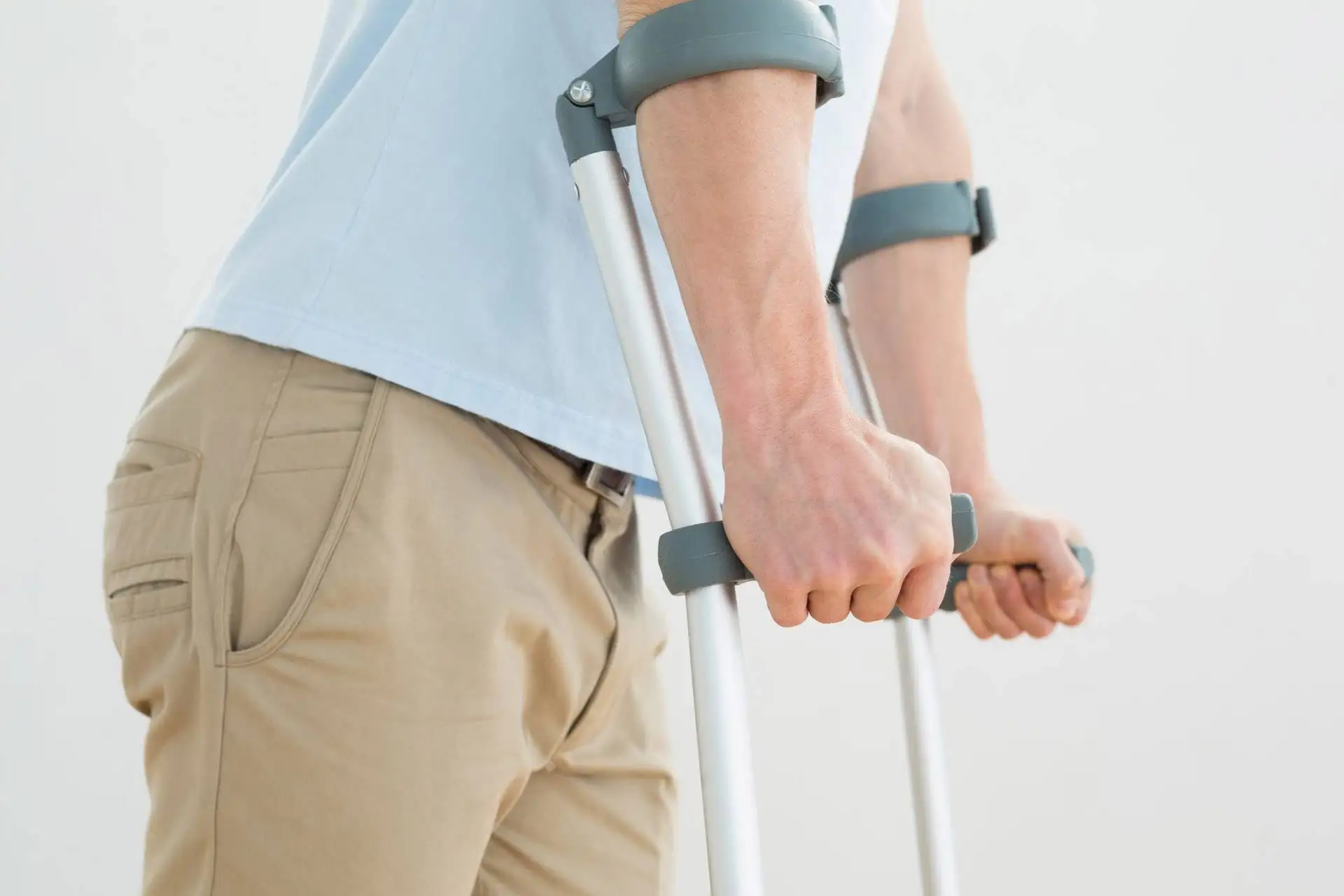
If you’ve lost a limb, hand, foot, or digit due to another party’s negligence, your ability to continue living your life to the fullest will be directly affected by your ability to recover on your complete losses.
And for that, the professional legal guidance of an accomplished California amputation lawyer is always advised.
Key Takeaways
- Most amputation claims have more than one defendant. A traffic collision, a machine without a guard, a product that failed, a delayed diagnosis that let an infection spread: each points to a different party, and the full recovery depends on naming all of them.
- The claim is priced over a lifetime. Prosthetic limbs are replaced every few years, sockets more often, and revision surgery, phantom limb pain treatment and lost earning capacity are projected by a life care planner and an economist, not read off the bills to date.
- Deadlines differ by defendant. Two years under Code of Civil Procedure 335.1 against a private party; six months to present a claim against a public entity under Government Code 911.2; and a medical malpractice amputation runs on the shorter clock in Code of Civil Procedure 340.5.
- Workers’ compensation is not the end of a workplace amputation. It pays limited benefits from the employer, but Labor Code 3852 allows a full civil claim against any third party, such as a machine manufacturer or a contractor, whose negligence caused the injury.
- Contingency only. Feher Law handles California amputation cases under a written fee agreement as Business and Professions Code 6147 requires. You pay nothing unless we win.
Why Amputation Clients Across California Call Feher Law
Feher Law has earned recognition as one of California’s top trial firms, and our unfailing commitment to our clients who’ve suffered catastrophic injuries like amputation and limb loss is one of the features that helps set us apart. When you work with one of our California personal injury attorneys, you can expect all the following advantages:
- We approach every claim we handle from the unique perspective it deserves. Your case involves specific circumstances, and this fact guides our legal efforts.
- We offer a free consultation with one of our trusted accident attorneys to help you gain a better understanding of your claim and your legal options.
- We have an exemplary track record for successfully guiding challenging cases toward advantageous outcomes that support our clients’ rights and rightful compensation.
- While most claims involving the loss of a limb are settled out of court, our skilled amputation attorneys have a wealth of litigation experience and will not hesitate to file a lawsuit and take your case to trial if doing so is the surest means of obtaining just compensation.
Your future hinges on your ability to recover from your serious losses, and we not only offer a free case evaluation but also deliver on our commitment to favorable results.

Verdicts & Settlements
$200M+ Recovered for California Workers & Injury Victims
Real case outcomes from Feher Law in personal injury, civil rights and elder abuse matters, resolved under California law.
See what your case could be worth.
Free, confidential case assessment. Available 24/7.
Past results do not guarantee future outcomes. Every case is evaluated on its specific facts under California law. View full results on our Case Results page.
Why Acting Fast Protects Your Case
A California amputation lawsuit is due within two years of the injury under Code of Civil Procedure 335.1, within six months as a government claim when a public entity is involved (Government Code 911.2), and on the shorter medical malpractice clock in Code of Civil Procedure 340.5 when a surgical error or a missed diagnosis caused the loss. Code of Civil Procedure 352 pauses the two-year period for an injured child, but the physical evidence does not wait.
In an amputation case the thing that caused the injury is usually the first thing to disappear:
- The machine is repaired or the guard replaced; the vehicle is salvaged; the product is thrown away
- Job-site conditions change daily and the subcontractors move on
- Hospital records of a delayed diagnosis are complete, but the chain of who knew what and when depends on witnesses
- Insurers for every defendant begin building the comparative fault argument immediately
Free consultations. No fee unless we win.
What Our Clients Say
Why California Clients Choose Feher Law
Super Lawyers 2022-2026 | Avvo 10.0 Superb | Gerry Spence Trial Lawyers College Graduate
Meet Our Team

Thomas Feher, Esq.
Founding Attorney

Stephen Wiard, Esq.
Senior Trial Attorney

Sandy Luu, Esq.
Associate Attorney

Alex Ballard, Esq.
Associate Attorney

Karen Parra, Esq.
Associate Attorney

Chase Nielsen, Esq.
Associate Attorney

Betsy Gomez
Managing Paralegal

Erica Feher
Chief of Operations

Brian Shimizu
Practice Support Manager

Marvin Rodriguez
Paralegal

Daniela Ramirez
Litigation Assistant

Alejandro Zelaya
Intake Specialist (Personal Injury)

Marcela Guzman
Intake Specialist (Employment)

Samantha Marquez
Legal Secretary

Omar Rosales
Pre-Litigation Manager
The Amputation Cases Feher Law Takes Across California
Amputation cases come to Feher Law from every part of California and from very different causes. The cause decides the defendant, the law and the deadline:
- Traffic collisions. Motorcycle, pedestrian and truck crashes are the leading cause of traumatic limb loss we see. The claim runs against the at-fault driver under Civil Code 1714, and against a trucking company under the federal rules when a commercial vehicle is involved.
- Workplace and industrial injuries. Presses, conveyors, saws and agricultural machinery take hands and arms. Workers’ compensation covers the employer, but the manufacturer of an unguarded machine, a general contractor or a property owner can be sued in a third-party action under Labor Code 3852.
- Defective products. A manufacturer, distributor and retailer are each strictly liable in California for a product whose design, manufacture or warnings were defective, without proof of negligence.
- Medical negligence. A missed vascular injury, an untreated infection or a surgical error that costs a limb is a malpractice claim, with the deadline in Code of Civil Procedure 340.5 and the non-economic damages limit in Civil Code 3333.2, which rises each year.
- Dog attacks and electrocution. A dog owner is strictly liable under Civil Code 3342, and a utility or contractor whose line or equipment caused a burn amputation answers in negligence.
Whatever the cause, the damages are measured the same way: every loss the injury caused, under Civil Code 3333.
First Steps After a Traumatic or Surgical Amputation
The weeks after an amputation are consumed by surgery, wound care and the start of rehabilitation. These are the few things that protect the legal claim during that time, most of which someone else can do for you:
- Have someone preserve the cause. Ask a family member to photograph the machine, the vehicle, the product or the scene before it is repaired, towed or cleaned, and to find out who owns it.
- Keep the records flowing. Every operative report, prosthetist visit and therapy note is part of the life care plan later. Follow the medical team’s plan and keep the appointments.
- Report it to the right place. Police for a collision; the employer and Cal/OSHA for a workplace injury; the retailer and manufacturer for a product.
- Say nothing to insurers beyond the fact of the injury. A recorded statement given during recovery is used against you.
- Call Feher Law early so a preservation demand reaches every party while the evidence still exists.
Filing Deadlines for a California Amputation Lawsuit
California gives an amputation plaintiff two years from the injury to file suit against a private defendant under Code of Civil Procedure 335.1. Three variations change that:
- Public entities. A claim against the state, a county, a city or a public hospital must be presented in writing within six months under Government Code 911.2, and suit follows within six months of rejection under Government Code 945.6.
- Medical malpractice. Code of Civil Procedure 340.5 requires suit within three years of the injury or one year from discovering it, whichever comes first, with a 90-day notice of intent to sue under Code of Civil Procedure 364.
- Minors. Code of Civil Procedure 352 pauses the two-year period for an injured child, but the government claim deadline has its own late-claim procedure and should be treated as fixed.
An amputation case takes time to prepare properly, because the life care plan cannot be finished until the residual limb has healed and the prosthetic fitting is known. That is a reason to start early, not to wait.
What a California Amputation Claim Can Recover
The damages in an amputation case are large because most of them are in the future. Under Civil Code 3333 a plaintiff recovers every loss the injury caused:
- Prosthetics for life. A prosthetic leg or arm is replaced every few years and the socket more often; a microprocessor knee or a myoelectric hand costs far more than a basic device, and the choice should be the patient’s, not the insurer’s. The life care plan prices each replacement over your life expectancy.
- Medical care. Revision surgery, treatment of phantom limb and residual limb pain, skin and bone complications, and the physical and occupational therapy that returns function.
- Earnings. Wages lost during recovery and, for most amputees, a permanent reduction in earning capacity, calculated by a vocational expert and an economist.
- Home, vehicle and daily life. Modifications, adaptive equipment and the household help an amputation makes necessary.
- Non-economic damages. Pain, disfigurement, the loss of activities and the psychological injury that accompanies limb loss. These are uncapped in a negligence case and often exceed every other category.
Where the defendant acted with malice or conscious disregard, such as a manufacturer that knew about a guarding defect, Civil Code 3294 allows punitive damages on top of compensation.
Contingency Fees on Amputation Cases
An amputation case is among the most expensive injury cases to prepare: a life care planner, a prosthetist, a vocational expert, an economist and often an engineer or a physician on liability. Feher Law advances all of it. The fee is a percentage of the recovery under a written agreement as Business and Professions Code 6147 requires, costs are repaid only from the recovery, and if there is no recovery you owe nothing. We also negotiate medical liens and health plan reimbursement claims before distribution, which protects the net amount that reaches you.

General Information on Amputations
What Classifies as an Amputation Injury?
Amputation injuries refer to the loss of a body part, which generally refers to the loss of a limb. The amputation can be caused by a devastating accident or can be the result of a surgically removed limb in the wake of severe physical trauma.
Amputations come with uniquely challenging consequences that include all the following:
- Mobility issues
- Difficulties with the activities of daily living
- Mental health concerns
- A lengthy healing process
- Specific healthcare needs can include physical therapy, rehabilitation, occupational therapy, and prosthetics
Having specialized legal support in the face of an injury this profound is also highly recommended.
Different Types of Amputation Injuries We See
Amputations are classified according to the affected body part as well as the nature of the injury, including the following:
- Digit Amputation – Refers to the loss of one or more fingers or toes.
- Metacarpal Amputation – The loss of one or more fingers at the metacarpal, or palm, level.
- Transtibial Amputation – Also called a below-the-knee amputation, refers to the removal of all or part of the lower leg below the knee.
- Transradial Amputation – Refers to the removal of all or part of the forehand and hand.
- Hemipelvectomy – A very serious but rare form of amputation that removes the leg along with half of the pelvis.
Typical Causes of Amputations
Some of the most common causes of amputations include:
- Traffic collisions, including car, truck, motorcycle, and pedestrian accidents
- Catastrophic events – falls from heights, explosions, fires, and violent attacks
- Medical malpractice, which can include surgical errors delayed diagnosis, incorrect diagnosis, and inadequate care
- Accidents on the job – injuries caused by industrial machinery, equipment malfunctions, and hazardous working conditions in industries like construction, manufacturing, and agriculture

The Evidence That Carries an Amputation Case
Liability in an amputation case is proven with the thing that caused it, and damages with the people who will treat it. What we gather:
- The machine, vehicle or product itself, inspected by our engineer before it is altered, and its maintenance, guarding and recall history
- Cal/OSHA inspection files and citations for a workplace injury, and the contracts that define who controlled the site
- Police reports, event data and video for a collision
- The complete medical chart, including the pre-amputation decision-making in a malpractice case
- The prosthetist’s and physiatrist’s records and the life care plan built from them
- Employment and earnings records for the vocational and economic analysis
- Day-in-the-life evidence from family, co-workers and your own account of what changed
Each piece is assembled with a jury in mind, which is also what makes an insurer pay the value of the case without one.
Amputation Settlement Amounts in California: Why There Is No Standard Figure
There is no standard settlement amount for an amputation case in California. What a claim is worth depends on the specifics of the case. The level of the amputation sets the prosthetic cost, the functional loss and the earnings impact, and those three factors, with the liability evidence and the insurance available, set the number. Multi-limb and above-joint losses carry the heaviest damages because every one of those factors is larger.
- Finger / toe: the loss of function in the hand or foot and any effect on work drive the value.
- Hand / foot: prosthetic needs, loss of function and the earnings impact drive the value.
- Forearm / lower leg: prosthetic cost and replacement cycle, functional loss and lost earning capacity drive the value.
- Above-elbow / above-knee: the greater prosthetic complexity, functional loss and care needs drive the value.
- Multiple limbs: every one of those factors is larger, and lifelong attendant care often enters the claim.
This is general information, not a prediction of what any case is worth. Every case depends on its own facts, the evidence, the law that applies, and the insurance available. Past results do not guarantee a similar outcome. This is not legal advice.
What Sets a Catastrophic Injury Trial Firm Apart
Many California firms advertise amputation cases; few have tried one. The difference shows in how the case is valued. A firm that settles everything prices a case on the medical bills and a multiplier. A trial firm prices it on what a jury would award for a lifetime without a limb, and prepares the evidence that supports that figure. Feher Law has tried more than 60 cases to verdict and recovered $200 million for California clients.
The insurer on the other side knows which firms try cases. That knowledge is reflected in every offer it makes.
Five Stages of a California Amputation Claim
Stage 1 – Intake and preservation
A free review of how the injury happened and who was involved, followed the same week by preservation demands to every party that holds the machine, the vehicle, the product or the records.
Stage 2 – Liability investigation
An engineer inspects the equipment or reconstructs the collision; Cal/OSHA files, maintenance logs, recall history and contracts are collected; witnesses are interviewed.
Stage 3 – The life care plan
Once the residual limb has healed and the prosthetic prescription is known, a life care planner, a prosthetist and an economist project the cost of care and the lost earnings over your lifetime.
Stage 4 – Demand and negotiation
A documented demand goes to every insurer with exposure. Multiple defendants mean multiple policies, and the demand is structured so that none of them can wait for the others.
Stage 5 – Trial or resolution
If the offers do not match the plan, we file and try the case. Most resolve before verdict, on terms that reflect what the jury would have awarded.
Talk to a California Amputation Lawyer Today
An amputation changes the shape of a life, and the claim that follows has to be large enough to carry the cost of that change for decades. Feher Law builds these cases for California juries and settles them only when the number reflects the lifetime, not the hospital bill.
We meet in person anywhere in Southern California or by phone statewide, at no charge. Fees are contingent: nothing unless we win.
Call (310) 340-1112 or tell us about the injury online, and a California amputation lawyer will call you back.
Notable Recent Settlements
Examples of California cases Feher Law has resolved on behalf of clients in this practice area:
- $2.82M – Premises Liability – Foot Injury
- $2M – Trip & Fall – Brain & Back Injury
- $1.61M – Slip & Fall – Shoulder Injury
- $1.45M – Premises Liability
Past results do not guarantee future outcomes. Every case is evaluated on its specific facts under California law.
Understand your claim: Use our free California Personal Injury Settlement Calculator to see how the inputs move the number, then ask our Torrance or Huntington Beach amputation lawyers what your own facts are worth.
Other Locations We Serve
Feher Law takes amputation cases statewide, with offices in Torrance and Huntington Beach and trial experience in courts across Southern California. Among the communities we serve:
For amputation and loss of limb cases in the area, visit our Huntington Beach amputation lawyer and Torrance amputation lawyer pages.
Services We Offer
When it comes to your recovery and peace of mind, it’s vital to have an expert by your side that really understands the bigger picture of personal injury law. Explore the full range of services we offer below.


This article is general information published by Feher Law, APC for marketing and educational purposes. It is not legal advice, it is not the opinion of any attorney about any specific case, and it does not create an attorney-client relationship. There is no standard settlement amount for any injury or case. What a claim is worth depends on the specifics of the case, and no result is predicted or guaranteed. Last updated November 2026.
Frequently Asked Questions
There is no reliable average, because the level of the amputation, the age and occupation of the client and the coverage available move the number by millions. A finger amputation with full return to work and an above-knee amputation of a 35-year-old tradesperson are not the same case. The table on this page shows how the level of limb loss shapes the range; the free consultation puts your facts into it.
Yes, and for most amputees it is the largest economic item. The claim includes every prosthetic replacement over your life expectancy, socket adjustments, the higher cost of a microprocessor or myoelectric device where medically appropriate, revision surgery, pain treatment, therapy and home and vehicle modification, all projected in a life care plan prepared by an expert.
Two years from the injury under Code of Civil Procedure 335.1 for most claims. A claim against a public entity requires a written claim within six months under Government Code 911.2. A medical malpractice amputation must be filed within three years of the injury or one year of discovering it, whichever is first, under Code of Civil Procedure 340.5. Each deadline is fatal to the case if missed.
Whoever caused it and whoever is legally responsible for them: a negligent driver and the owner of the vehicle, a machine manufacturer and the contractor who removed its guard, a property owner and its maintenance company, a surgeon and the hospital, or a dog owner, who is strictly liable under Civil Code 3342. Workplace injuries add a third-party claim under Labor Code 3852 against anyone other than the employer. Naming every party is what reaches every policy.
It bars a lawsuit against your employer and co-workers, but not against anyone else. If a press, a conveyor or a saw was defectively designed or lacked a guard, the manufacturer can be sued; if a general contractor or another subcontractor created the hazard, they can be sued; if the property owner knew of it, so can they. The civil claim recovers the pain and suffering and full wage loss that workers' compensation does not pay.
Nothing out of pocket. The fee is a percentage of the recovery under a written agreement as Business and Professions Code 6147 requires, the firm advances the experts and litigation costs, and if there is no recovery you owe no fee and no costs. You pay nothing unless we win.
GET A FREE CONSULTATION
Our team is standing by and ready to assist you. Consultations are completely free and confidential. We will help you determine if you have a case.
- Over $200 Million Recovered For Clients
- No Fees Unless We Win
- We Fight for Maximum Compensation
- Get The Justice You Deserve
"*" indicates required fields