
New California Laws in 2026: 5 Changes That Could Affect Your Rights
- Tom Feher, Esq.

By Thomas Feher, Esq.|Founder, Feher Law APC|50+ jury trials|$170M+ recovered|Super Lawyers 2022-2026|Avvo 10.0
California’s 2026 employment-law changes include AB 692 (stay-or-pay contracts signed on or after January 1, 2026 unenforceable under Business and Professions Code 16608 and Labor Code 926), AB 2299 (a model whistleblower-rights notice employers must post under Labor Code 1102.8), SB 1100 (driver-license requirements in job postings limited under Government Code 12940), and updated minimum wage at $16.90 statewide under Labor Code 1182.12. Our practice is already advising workers facing repayment demands voided by AB 692, since employers attempting collection under voided agreements face restitution, Business and Professions Code 17200 exposure, and PAGA penalties. Three-year filing window for most wage claims under Code of Civil Procedure 338, enforced through the private right of action in Labor Code 1194. This guide covers every 2026 law that materially affects California workers and how to enforce them.
Key Takeaways
- Rideshare insurance: Coverage dropped 94% (from $1M to $60K per accident).
- IVF coverage: Large employers (101+ employees) must now cover fertility treatment, including up to three egg retrievals.
- Police accountability: Officers who conceal their faces lose qualified immunity and can be sued personally for wrongful arrest or assault.
- No-repay rule: Employers cannot demand workers repay training costs, relocation fees, or quit fees. Violations are void; workers can recover $5,000+.
- Minimum wage: Increased to $16.90/hour statewide. Many cities and industries mandate higher rates (LA: $17.87; fast food: $20; healthcare: up to $25).
Bottom line: If you’ve been injured in a rideshare accident, denied fertility benefits, wrongfully arrested, forced to repay employment costs, or underpaid, California law protects you.
Whether you’re in Torrance or Huntington Beach, our Torrance personal injury lawyer and Huntington Beach personal injury lawyer teams are here to protect your rights under these new laws.(310) 340-1112
Uber and Lyft Quietly Slashed Your Passenger Protection
What Changed in Rideshare Insurance Coverage
Starting January 1, 2026, rideshare companies drastically reduced insurance coverage protecting injured passengers. Senate Bill 371 dropped required uninsured and underinsured motorist coverage from $1 million to just $60,000 per person and $300,000 per accident (Public Utilities Code 5433, for crashes on or after January 1, 2026).
That’s a 94% reduction in financial protection for anyone injured in or by a rideshare vehicle.
This came as a political compromise. In exchange for allowing rideshare drivers to unionize under Assembly Bill 1340, California lawmakers reduced insurance requirements.
Uber and Lyft claimed nearly one-third of every California ride fare went toward insurance premiums. They argued this made California rides more expensive than anywhere else in the country.
What This Means for Accident Victims
Medical bills from even a moderate car accident easily exceed $60,000. Emergency room visits, diagnostic imaging, surgery, and rehabilitation add up fast.
If you’re injured by an uninsured driver while in a rideshare, you could face catastrophic medical debt once the insurance cap is reached.
The law maintains some safeguards:
- $1 million in liability coverage when rideshare drivers cause accidents
- $200,000 excess policy for certain specific situations
- Standard coverage during active rides with passengers in the vehicle
But for crashes caused by uninsured third parties, the new lower limits create serious gaps.
What to Do If You’re Injured in a Rideshare Accident
Document everything immediately:
- Save your ride receipt with driver information, vehicle details, and trip logs
- Photograph the crash scene, road conditions, and all vehicle damage
- Seek medical attention right away and keep every record
- Note all passengers and witnesses with contact information
At Feher Law, we help accident victims identify all available insurance coverage, including sources you may not know exist. Our team can investigate your rideshare accident, determine what coverage applies, and fight to maximize your recovery from every available source.
Additional reading: personal injury settlement amounts examples
If you’ve been injured in a rideshare accident, call Feher Law at (310) 340-1112 for a free consultation. We identify all available insurance coverage and fight for maximum compensation.

More Californians Now Get IVF Covered Under Their Health Insurance
What Senate Bill 729 Requires
California expanded access to fertility treatment with Senate Bill 729. The law requires large employer health plans to cover infertility diagnosis and treatment, including in vitro fertilization.
Coverage takes effect January 1, 2026, though actual availability depends on when individual insurance plans renew throughout the year.
Who Is Covered by This Law
The law applies to:
- Fully insured large group health plans (101+ employees)
- Plans regulated by the California Department of Insurance or the Department of Managed Health Care
- Coverage for up to three completed egg retrievals per person
- Unlimited embryo transfers following American Society for Reproductive Medicine guidelines
SB 729 broadens the definition of infertility to be more inclusive. It specifically extends coverage to LGBTQ+ individuals, single parents by choice, and others historically excluded from fertility benefits.
This represents a major step toward equity in family-building access.
Who Is NOT Covered
The law does not apply to:
- Self-funded employer plans
- Small group plans (100 or fewer employees)
- Individual market plans
- Medi-Cal
- Religious organizations (exempt)
For state employees covered under CalPERS, coverage begins July 1, 2027.
Check with your HR department or benefits administrator to confirm when your plan renews. Call your insurance member services number and specifically ask about coverage for:
- Infertility diagnosis
- IVF procedures
- Egg retrievals
- Embryo transfers under California’s SB 729
What May Not Be Covered
While the law mandates coverage of core fertility services, certain treatments may not be included. Preimplantation genetic testing or elective egg freezing for non-medical reasons might not be covered.
Always get written confirmation of what’s covered before beginning treatment.
If your employer denies coverage you believe you’re entitled to under SB 729, or if you’ve faced discrimination related to family planning, our employment law team can review your benefits package and advise you on your legal options
For questions about employment benefits or discrimination related to family planning, contact our employment law team at Feher Law.(310) 340-1112

Police Officers Can Be Sued If They Cover Their Faces
What the No Secret Police Act Does
Senate Bill 627 prohibits most law enforcement officers from wearing masks or face coverings that conceal their identities while performing duties. The law took effect January 1, 2026.
It applies to local, state, federal, and out-of-state officers operating in California.
State Senator Scott Wiener introduced the legislation after immigration enforcement raids in California during 2025. Agents wore full ski masks that obscured their faces.
The law aims to ensure accountability by requiring officers to be identifiable when interacting with the public.
What Happens to Officers Who Violate This Law
Officers who wear masks face serious consequences:
- Loss of qualified immunity, the legal doctrine that typically protects officers from personal liability
- Personal liability for assault, battery, false imprisonment, false arrest, or malicious prosecution
- Minimum penalty of $10,000 for committing these offenses while wearing a mask
Without qualified immunity, officers can be sued individually for wrongful actions.
When Officers Can Still Wear Masks
The law includes several exemptions:
- California Highway Patrol officers (fully exempt)
- Undercover operations
- Medical conditions requiring face coverings
- Standard safety equipment, like motorcycle helmets or sunglasses not designed to hide identity
Law enforcement agencies must adopt policies governing the use of facial coverings by July 1, 2026.
The Trump administration sued to block the measure. Federal lawyers argue it unconstitutionally interferes with federal law enforcement operations and puts officers at risk.
California agreed not to enforce the law against federal agents while litigation is ongoing. Local law enforcement unions also opposed the measure.
If you believe you’ve been wrongfully detained, arrested, or assaulted by masked officers after January 1, 2026, this law creates new accountability pathways.
If an officer wore a mask concealing their identity and doesn’t qualify for an exemption, you may pursue civil claims without the barrier of qualified immunity.
What to Document During Law Enforcement Encounters
Gather this information:
- Whether officers displayed visible identification
- Whether their faces were covered
- Date, time, and location
- What happened during the encounter
- Contact information from any witnesses
Our firm can help you evaluate whether a law enforcement encounter violated SB 627 and what legal remedies may be available. We’ll review the circumstances of your case, gather evidence, and pursue accountability if your rights were violated.
If you’ve been injured or wrongfully detained by law enforcement, call Feher Law at (310) 340-1112 to discuss your rights.
Your Boss Can't Bill You for Quitting Anymore
Assembly Bill 692 banned most “stay-or-pay” provisions in employment contracts. Effective January 1, 2026, California employers cannot require workers to repay debts when employment ends.
The law prohibits contract terms requiring workers to repay:
- Training costs
- Replacement hire fees
- Retraining fees or quit fees
- Immigration costs or visa expenses
- Relocation reimbursements
- Liquidated damages based on separation from employment
The prohibition applies equally whether you quit voluntarily or are terminated by your employer. The law protects all workers, including current and prospective employees.
It potentially covers independent contractors and freelancers, though the exact application to contractors remains to be clarified.
Exceptions to the Stay-or-Pay Ban
AB 692 includes narrow exceptions. Tuition reimbursement agreements are still allowed if they meet these requirements:
- Agreement is separate from the employment contract
- Education leads to a transferable credential, not required forthe current job
- Repayment amount is specified upfront and capped at actual costs
- Repayment is prorated over the employment period
- Repayment is only triggered by voluntary separation or termination for misconduct
How Sign-On and Retention Bonuses Work Now
Sign-on and retention bonuses can require repayment under strict conditions:
- Terms must be in a separate written agreement
- Employees must be notified of their right to consult an attorney
- Employees get at least five business days to review before signing
- Repayment must be prorated over a period not exceeding two years (Business and Professions Code 16608)
- Employees must have the option to defer receiving the bonus until the retention period ends
The law does not apply to:
- Apprenticeship programs approved by California’s Division of Apprenticeship Standards
- Loan repayment assistance or forgiveness programs provided by government agencies
- Contracts related to residential property transactions
Enforcement and Penalties for Violations
Any contract or provision violating AB 692 is void and unenforceable. Workers subjected to prohibited repayment demands can sue for:
- Injunctive relief
- Actual damages, or $5,000 per affected worker (whichever is greater)
- Reasonable attorneys’ fees and costs
This creates a powerful enforcement mechanism.
The law only applies to contracts entered into on or after January 1, 2026. Older agreements entered before that date may still be enforceable.
However, they must comply with other California wage laws and federal requirements.
If your employer is demanding repayment for quitting, our employment law team can review your contract, determine whether it violates AB 692, and advise you on the best way to protect yourself. We’ll stand up to employer bullying and fight to ensure you don’t pay money you don’t legally owe
If your employer is demanding repayment for quitting or threatening wage deductions, contact Feher Law’s employment law team at (310) 340-1112. We fight for workers’ rights.
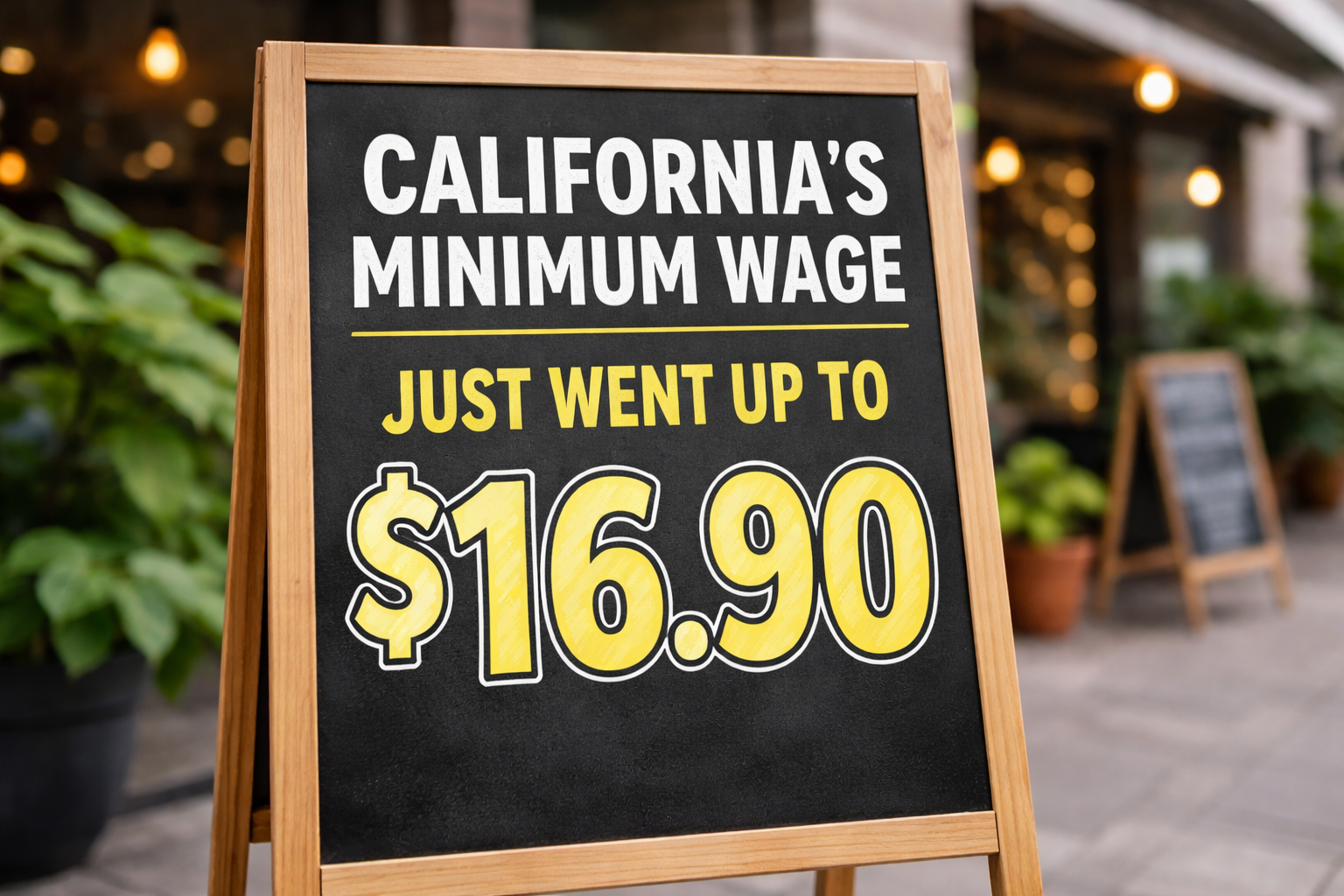
California's Minimum Wage Just Went Up to $16.90
California’s statewide minimum wage increased from $16.50 to $16.90 per hour. This 40-cent raise applies to all employers regardless of size.
The adjustment reflects annual cost-of-living increases tied to the Consumer Price Index for Urban Wage Earners.
This baseline increase also raises the minimum salary requirement for exempt employees. To qualify as exempt in California, employees must now earn at least $70,304 annually.
This is calculated as twice the state minimum wage for full-time employment.
Industry-Specific Minimum Wages in California
The $16.90 figure represents only the state minimum. Many California workers earn significantly higher wages based on their industry:
Fast food workers:
- $20 per hour at restaurants with 60+ locations nationwide (effective April 2024)
Healthcare workers:
- Between $18.63 and $24 per hour, depending on facility type (as of July 1, 2025)
- Further increases are scheduled for July 1, 2026
- Eventually, all covered healthcare facilities must pay at least $25 per hour
Hotel workers in some cities earn even more:
- Los Angeles hotels (60+ rooms): $22.50 per hour, increasing to $30 per hour by July 2028
- Santa Monica hotel workers: $22.50 per hour
These targeted increases help workers afford to live in high-cost areas.
Local Minimum Wages That Exceed State Requirements
Many California cities and counties exceed the state requirement. As of January 1, 2026:
- West Hollywood: $20.25 per hour (highest city minimum wage)
- Los Angeles: $17.87 per hour (all employers)
- Santa Monica: $17.81 per hour
- Unincorporated Los Angeles County: $17.81 per hour
- Pasadena: $18.04 per hour
How to Determine Your Correct Minimum Wage
The minimum wage you’re entitled to depends on where you physically perform work, not where your employer is headquartered.
- If you work remotely from home, your home city’s minimum wage applies
- If you travel to different work sites, you may be entitled to different minimum wages depending on those locations
Verify that your annual salary meets the new threshold of $70,304 for 2026 if you’re classified as exempt. If your salary falls below this amount, you should either:
- Receive a raise to meet the minimum, or
- Be reclassified as non-exempt and paid overtime for hours worked beyond 40 per week
California employers who fail to pay the correct minimum wage face:
- Back pay for the underpayment
- Waiting time penalties up to 30 days of wages if the violation continues after termination
- Liquidated damages equal to the amount of unpaid wages
- Civil penalties
- Attorneys’ fees for successful wage claims
Check your pay stubs carefully. Make sure your wage rate is clearly listed and matches or exceeds the highest applicable minimum wage based on:
- State law ($16.90)
- Your city or county requirements
- Your specific industry requirements
Your Rights Regardless of Immigration Status
The California Labor Commissioner’s Office investigates wage theft and unfair business practices. California law protects workers regardless of immigration status.
You’re not required to disclose immigration status when filing wage claims. The Labor Commissioner doesn’t ask about it.
At Feher Law, we help workers recover unpaid wages and hold employers accountable for wage theft. Our employment law team can calculate exactly what you’re owed, file claims on your behalf, and pursue every penny of back pay, penalties, and damages you deserve.
Additional reading: soft tissue injury settlement examples
If you believe you’re being paid less than minimum wage or denied overtime, Feher Law can help you recover what you’re owed. Contact us today.
How Feher Law Can Help You Navigate These New Laws
The five laws discussed here represent just a fraction of nearly 800 that took effect in 2026. They touch on critical issues affecting your daily life and legal rights.
These changes empower you to recognize when your rights have been violated. Whether you’ve been injured in an accident with inadequate insurance coverage, denied benefits, subjected to unlawful treatment, forced to pay money you don’t owe, or paid less than minimum wage, California law provides remedies.
Our Track Record Fighting for Clients
At Feher Law, we’ve recovered over $170 million for clients facing these kinds of injustices. We know how insurance companies, employers, and powerful institutions attempt to deny people their rights.
We fight back with:
- Trial-ready litigation and thorough preparation
- Relentless advocacy against wrongdoers
- Clear communication throughout your case
- Personal attention to every client
Why Choose Feher Law
You shouldn’t navigate complex legal issues alone. We make justice accessible:
- No upfront fees: We handle cases on contingency. You pay nothing unless we win.
- We advance all case costs: Financial barriers never stand between you and justice.
- Free consultations: Every client receives a confidential case evaluation.
- Extensive trial experience: We’re prepared to take your case to verdict if needed.
If any of these new 2026 laws affect you, or if you’ve been injured or treated unfairly at work, we’re here to help. Our team can review your situation, explain your options, and fight for the maximum compensation you deserve.
Call Feher Law at (310) 340-1112 or contact us online for a free, confidential consultation. We’re ready to fight for you.
Frequently Asked Questions
Frequently Asked Questions
What new employment laws took effect in California in 2026?
Major 2026 employment laws include AB 692 restrictions on stay-or-pay repayment clauses, expanded paid sick leave under Labor Code 246, new pay transparency requirements, and strengthened whistleblower protections. SB 399, the captive-audience meeting ban in Labor Code 1137, is NOT in force: a federal court blocked it with a preliminary injunction on September 30, 2025 (California Chamber of Commerce v. Bonta), and the Ninth Circuit heard argument on July 7, 2026 without a ruling as of this review.
Are non-compete agreements enforceable in California in 2026?
No. Business and Professions Code 16600 voids non-competes, and AB 1076 (effective 2024) required employers to notify employees by February 14, 2024 that existing non-competes are void. Employers who try to enforce a non-compete in California can face civil penalties and attorney's fees.
What is the California minimum wage in 2026?
California's statewide minimum wage rose to $16.90 per hour for all employers effective January 1, 2026, with industry-specific minimums higher for fast food ($20 since April 1, 2024) and health care, where Labor Code 1182.14 sets a tiered schedule reaching $25 an hour for large health systems from July 1, 2026. Many cities including Los Angeles, San Francisco, and West Hollywood have local minimums above the state rate.
What new personal injury laws affect California cases in 2026?
Civil Code 3333.2 (MICRA) caps in medical malpractice cases continue to rise under the 2022 reform schedule, reaching $470,000 for non-death cases in 2026. Otherwise, California's pure comparative negligence rule and 2-year personal injury statute of limitations under Code of Civil Procedure 335.1 remain unchanged.
Did California change its statute of limitations laws for 2026?
No major changes to general statutes of limitations. CCP 335.1 still provides 2 years for personal injury, CCP 338 provides 3 years for property damage and fraud, Government Code 911.2 requires 6-month government claims, and Government Code 12960 provides 3 years for FEHA discrimination claims.
How do new California laws affect existing employment contracts in 2026?
New employee-protective laws generally apply prospectively but void unlawful contract provisions immediately. For example, AB 692 voids existing non-compete clauses regardless of when signed. Employers are required to send written notice to current and former employees that prior non-competes are unenforceable.
Does AB 692's stay-or-pay ban apply to contracts I signed in 2025?
No, AB 692 only applies to employment contracts entered into on or after January 1, 2026. Agreements signed before that date remain subject to pre-existing California law. However, if your employer modifies your contract after January 1, 2026, courts may apply AB 692 to the amended terms. Consult an employment attorney to review your specific agreement.
Can I recover compensation from multiple insurance policies after a 2026 rideshare accident in California?
Yes, you may be able to stack coverage from multiple sources. Beyond the rideshare company’s reduced $60,000 uninsured motorist coverage, you can potentially claim against the at-fault driver’s personal insurance, your own uninsured/underinsured motorist policy, and, if the rideshare driver was at fault, the company’s $1 million liability coverage. An experienced attorney identifies all available policies.
How do I know if my California employer's health plan must cover IVF under the 2026 law?
Contact your HR department and ask two questions: Does your company employ 101 or more people, and is your health plan fully insured or self-funded? SB 729 only mandates IVF coverage for large group plans with 101+ employees that are fully insured. Self-funded plans are exempt regardless of company size. Small employers with fewer than 101 employees aren’t required to provide coverage.
What happens if a California police officer wears a mask during my arrest in 2026?
If an officer wore a mask concealing their identity without qualifying for an exemption under SB 627, they would lose qualified immunity protections. This means you can sue them personally for wrongful actions like false arrest, assault, or battery, with a minimum $10,000 penalty. However, the law doesn’t currently apply to federal agents due to ongoing litigation. Document everything about the encounter immediately.
If I work remotely from home in Los Angeles, does my employer have to pay me LA's $17.87 minimum wage in 2026?
Yes, California’s minimum wage depends on where you physically perform work, not your employer’s headquarters location. If you work from home in Los Angeles, your employer must pay at least $17.87 per hour as of January 1, 2026. This applies even if your company is based in another city or state. If you’re paid less, you may be entitled to back pay and penalties.
Estimate your case value: Use our free Wrongful Termination Settlement Calculator for a quick estimate of what your case could be worth, or speak directly with a Torrance employment lawyer for a personalized review.
Last reviewed by Thomas Feher, Esq. – September 2026