Hit by a Car While Walking in California: What to Do (2026)
- Tom Feher, Esq.

By Thomas Feher, Esq.|Founder, Feher Law APC|50+ jury trials|$170M+ recovered|Super Lawyers 2022-2026|Avvo 10.0
If you were hit by a car while walking, Feher Law recommends prioritizing your safety by moving out of traffic if possible and calling 911 immediately. Even if you don’t feel pain right away, seek medical care to document severe injuries, address shock, and protect your health after a pedestrian accident in California. Gather driver and witness information, take photos of the scene, and avoid admitting fault or discussing the incident publicly.
If you need experienced personal injury representation, our Torrance Pedestrian Accident Lawyers are ready to protect your rights and pursue the compensation you deserve. Call (310) 340-1112 today for a free consultation and get trusted legal guidance focused on your recovery and financial future.
The qualified Torrance pedestrian lawyers at Feher Law are committed to ensuring your legal rights, and we’ll leave no stone unturned in our focused efforts to do so.

Related Practice Areas
Feher Law represents California clients in the following practice areas relevant to this article:
I was hit by a car as a pedestrian, what do I do immediately?
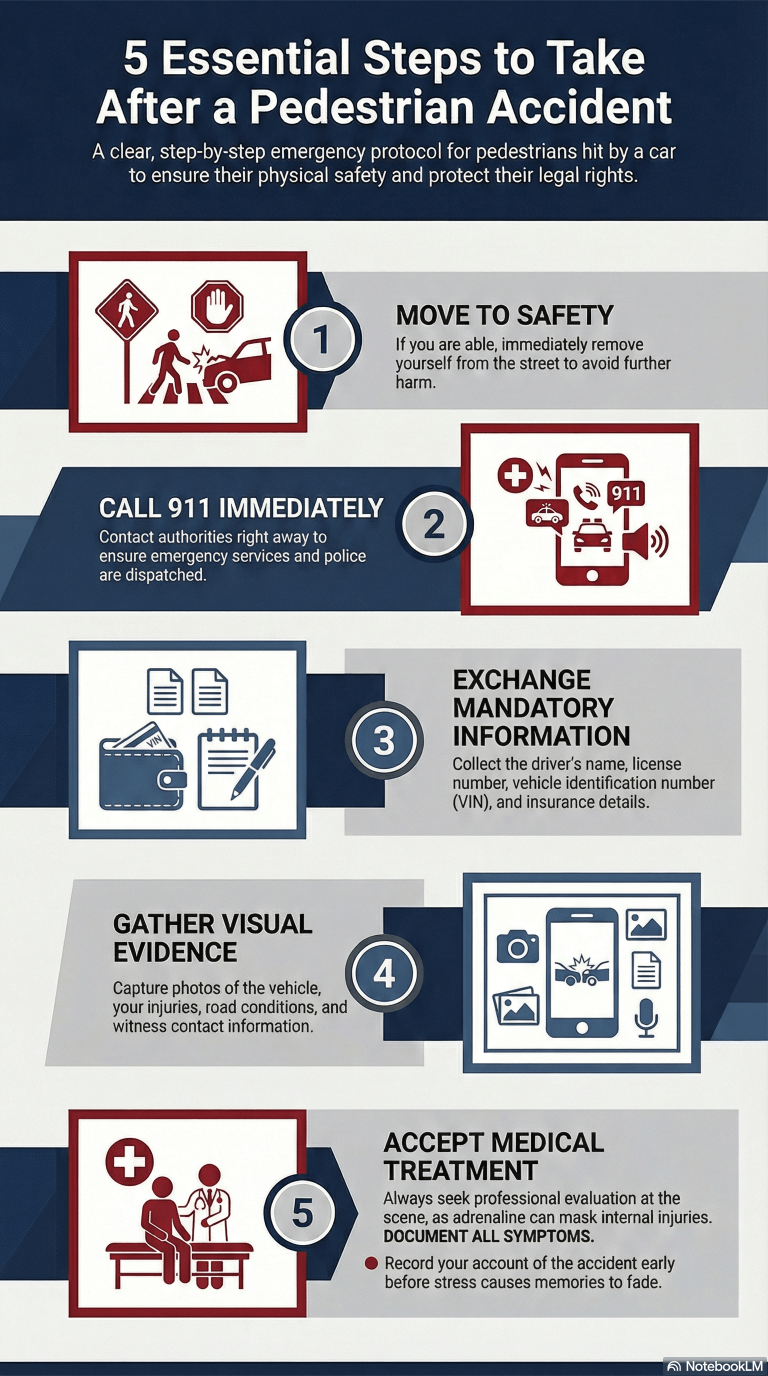
If you were hit by a car as a pedestrian, these are the first 5 steps you should follow that will help you build a strong claim and ensure your recovery process is on the right track:
1. Consider your safety
To begin, it’s important to say that pedestrian accidents are some of the deadliest out there, and if you’re a pedestrian accident victim who has been seriously injured, you should skip directly to Step 5.
Otherwise, it’s time to consider your safety and to remove yourself from harm’s way, which means getting off the street.
2. Call 911
Even if you think someone may have already called the authorities, call the police – or 911 – right away. This is the best means of ensuring that help will be on the way as soon as possible.
3. Exchange contact information with the at-fault driver
In California, motorists involved in accidents are required to exchange basic contact information, which includes the following:
- Name, current address, and phone number
- Driver’s license number
- Vehicle identification number
- Auto insurance card
As an injured pedestrian, you should request this information of the driver who hit you and you should also provide the other driver with your contact information.
4. Collect relevant evidence
If you’re able, do what you can to gather evidence at the scene, which can go a long way toward building a strong claim – in pursuit of just compensation that covers your losses in their entirety. Some of the most common forms of evidence in pedestrian accidents include:
- Photos and videos of the accident itself or of its aftermath – as captured by you, by eyewitnesses at the accident scene, or by the authorities who respond to the accident
- Footage from dashcams, security cameras, or traffic cameras
- Photographic documentation of your injuries
- Any physical evidence at the scene
- The testimony of eyewitnesses
- Your account of how the accident happened – your memories may fade due to accident-induced stress, which makes it advisable to make notes on your phone
- The police report that documents the accident and any tickets that were issued
Accident cases involving pedestrians are based on evidence, and the stronger the evidence, the stronger your case will be.
5. Accept medical treatment at the scene
If you were seriously injured by someone else’s negligence, you’re likely to receive emergency treatment and be transported to a medical facility for emergency medical care.
Even if you think you feel fine at the time of the accident, it’s important to accept medical treatment if it’s offered and to seek medical attention if it’s not. The bottom line is that pedestrians are exceptionally vulnerable to the overwhelming impact of a traffic accident. The adrenaline, along with the physical and emotional shock that you experience, can mask your symptoms and pain.
If you’ve been struck by a car, understanding what to do if you get hit by a car while walking is critical to protecting your health and your legal rights. It’s always in your best interests to err on the side of caution by consulting with a medical professional as soon as possible.
What to Do When You Get Hit by a Car as a Pedestrian: Days, Weeks, and Months After
In the First Few Days After the Accident (0–7 Days)
In the days immediately following a pedestrian accident, your top priorities should be protecting your health, documenting the incident, and preserving critical evidence before it disappears. Injuries may not feel severe at first due to shock or adrenaline, so early medical evaluation and official reporting can play a key role in both your recovery and your claim.
Action steps to take during this stage:
- Follow up with medical providers and report every symptom, even if it seems minor
- Ensure the accident is officially documented by law enforcement when possible
- Secure driver and witness contact information and save photos of the scene, vehicle, and injuries
- Avoid making statements that could be interpreted as accepting blame
In the Weeks After the Accident (Weeks 2–8)
As your recovery continues, consistency and organization become essential to protecting the strength of your case. This is often when insurance companies begin reviewing fault, evaluating injury severity, and attempting to limit their financial exposure.
Key steps to stay on track:
- Notify your insurance provider and keep communication factual and limited
- Maintain all medical records, billing statements, and proof of missed income
- Continue recommended treatment and keep a weekly log of pain, mobility limits, and daily challenges
- Allow your attorney to manage insurer communication and claim negotiations
In the Months After the Accident (Months 2+)

In the months following a pedestrian injury, the focus shifts toward understanding long-term medical needs, tracking ongoing limitations, and protecting the full value of your claim before settlement decisions are made. Many pedestrian injuries require extended treatment, future care planning, or legal escalation if insurers refuse to offer fair compensation.
Your priorities during this stage should include:
- Following through with long-term treatment and updating doctors on lingering or worsening symptoms
- Collecting updated medical evaluations and documentation of lasting impairments
- Avoiding premature settlement offers until future recovery needs and financial impacts are fully assessed
- Preparing for potential litigation if negotiations fail to reflect the true value of your injuries
To help you stay organized and avoid costly mistakes, the timeline below outlines key actions at each stage of recovery and explains how they protect both your health and the value of your pedestrian accident claim.
| Timeframe | Recommended Actions | How This Protects Your Case Value |
|---|---|---|
| Days 0–7 |
• Seek follow-up medical care • Secure police documentation when available • Preserve photos, reports, and witness details • Limit insurance conversations |
Creates early medical proof, locks in accident details, and prevents insurers from disputing injury timing |
| Weeks 2–8 |
• Stay consistent with treatment and rehabilitation • Track missed work and physical or emotional limitations • Maintain organized medical and financial records • Let your attorney handle insurer contact |
Builds a strong record of ongoing harm and financial impact, increasing leverage in settlement negotiations |
| Months 2+ |
• Monitor long-term symptoms or complications • Gather updated medical and work-restriction records • Evaluate future care needs before settling • Prepare for litigation if needed |
Ensures long-term damages are not undervalued and positions your claim for maximum compensation potential |
What NOT to Do After a Pedestrian Accident
If you’ve been injured as a pedestrian, certain mistakes can weaken your claim or reduce the compensation you may be entitled to recover. Avoiding early missteps can protect your credibility, preserve key evidence, and prevent insurance companies from using your words or actions against you.
To safeguard your case, avoid the following actions:
- Giving recorded statements or detailed explanations to the driver’s insurance company
- Accepting quick settlement offers before the full extent of your injuries is known
- Posting about the accident or your recovery on social media
- Signing medical or legal documents without legal review
Failing to take the right precautions can result in serious financial consequences and limit your ability to recover full damages. Speaking with an experienced pedestrian accident attorney early can help ensure your rights and compensation are fully protected.
Damages You May Recover After Being Hit by a Car as a Pedestrian
A primary factor in your pedestrian accident claim is accurately assessing your full physical, financial, and emotional losses, as your settlement should reflect the complete impact of your injuries. Because pedestrian accidents often cause serious harm, damages may extend far beyond initial medical bills and lost wages.
Your compensation may include both economic and non-economic damages, ensuring that your recovery accounts for immediate costs, long-term consequences, and the personal toll of the accident.
Economic Damages
Medical Bills and Ongoing Treatment
In the wake of a pedestrian accident, medical expenses can escalate quickly, especially when injuries require long-term care or specialized treatment. Many victims need continued rehabilitation, follow-up procedures, and ongoing therapy to manage complications or regain mobility.
Compensable medical-related damages may include:
- Emergency treatment and hospital care
- Chiropractic care, rehabilitation, and physical therapy
- Assistance with daily living activities
- Prescription medications and medical equipment
- Current and future medical expenses
- Out-of-pocket costs related to accident recovery
Keeping consistent medical records and following your doctor’s recommendations plays a key role in ensuring your settlement fully reflects your healthcare needs.
Lost Income and Reduced Earning Capacity
While focusing on recovery, many injured pedestrians face missed work, reduced hours, or long-term employment disruptions. If your injuries limit your ability to work in the future, you may also be entitled to compensation for diminished earning potential.
Recoverable income-related damages may include:
- Wages lost during recovery
- Reduced earning capacity due to lasting impairments
- Missed career opportunities or forced job changes
- Long-term disability affecting income stability
Property Damage
In addition to medical and income losses, you may be entitled to compensation for personal property damaged in the accident. This can include items such as phones, computers, clothing, glasses, or other valuables damaged during the impact.
Non-Economic Damages
Physical and Emotional Pain and Suffering
Beyond financial losses, pedestrian accidents frequently result in significant emotional and psychological harm. These damages reflect the pain, stress, and disruption caused by the trauma of being struck by a vehicle.
Common non-economic damages include:
- Chronic physical pain and discomfort
- Emotional distress, anxiety, and depression
- PTSD-like symptoms and accident-related fear
- Sleep disturbances and difficulty concentrating
- Loss of enjoyment of life and daily independence
- Psychological trauma and reduced quality of life
Insurance companies often attempt to undervalue emotional damages, but these losses are a legitimate and critical part of your overall recovery.
| Damage Category | What It Covers | Why It Matters for Your Settlement |
|---|---|---|
| Medical Expenses | ER visits, surgery, rehabilitation, therapy, medications, future care | Ensures both immediate and long-term healthcare needs are fully compensated |
| Lost Income | Missed wages, reduced work hours, diminished earning capacity | Protects your financial stability during recovery and beyond |
| Property Damage | Phones, clothing, glasses, computers, and other damaged belongings | Prevents personal financial losses unrelated to medical care |
| Pain and Suffering | Physical pain, emotional distress, PTSD, anxiety, and depression | Compensates for the personal and psychological impact of the accident |
| Loss of Quality of Life | Inability to enjoy hobbies, relationships, independence, or normal activities | Reflects lifestyle disruptions and long-term personal losses |
| Future Damages | Long-term medical care, disability, career limitations, ongoing therapy | Prevents undervaluation of injuries with lasting or permanent effects |
In fact, your accomplished San Bernardino pedestrian accident lawyer will spare no effort when it comes to ensuring that this category of loss is well represented – and difficult to refute.
Can a pedestrian sue if they are hit by a car?
Yes, a pedestrian who is hit by a car can sue the at-fault driver, especially if the driver acted negligently. California law protects pedestrians and allows injury victims to seek compensation for medical bills, lost wages, and pain and suffering, even in cases involving partial fault.
- Negligence: If the driver failed to exercise reasonable care (e.g., speeding, distracted driving, or ignoring traffic signals), they may be found negligent and liable for the pedestrian’s injuries.
- Duty of Care: All drivers have a legal obligation under Civil Code 1714 to watch for pedestrians and drive safely. Breaching that duty, like not yielding at a crosswalk, can result in legal consequences.
- Causation: The pedestrian must show that the driver’s negligence directly caused their injury. Medical records, accident reports, and witness testimony often serve as critical evidence.
- Compensation: Injured pedestrians can pursue damages for medical expenses, loss of income, rehabilitation, and emotional distress through an insurance claim or a personal injury lawsuit.
- Partial Fault: Even if the pedestrian was partially at fault (e.g., jaywalking), California’s comparative negligence rules allow them to recover compensation, reduced by their percentage of fault.
- Child Pedestrians: Children are given additional legal protections. Drivers are expected to exercise greater caution near schools and residential areas, making it easier to prove negligence if a child is struck.

Legal rights and compensation when getting hit by a car as a pedestrian
A skilled attorney serves as your primary advocate, taking comprehensive steps to protect your legal interests while you focus on recovery. The legal process involves a strategic approach to building and pursuing your claim.
Our pedestrian accident attorney will systematically manage your case by:
- Compiling critical evidence to strengthen your claim
- Filing formal insurance claims
- Guiding you through complex legal procedures
- Negotiating assertively with insurance companies
- Preparing for potential litigation if settlement negotiations fail
Typical timeline for your claim
In terms of time, your claim will proceed something like this:
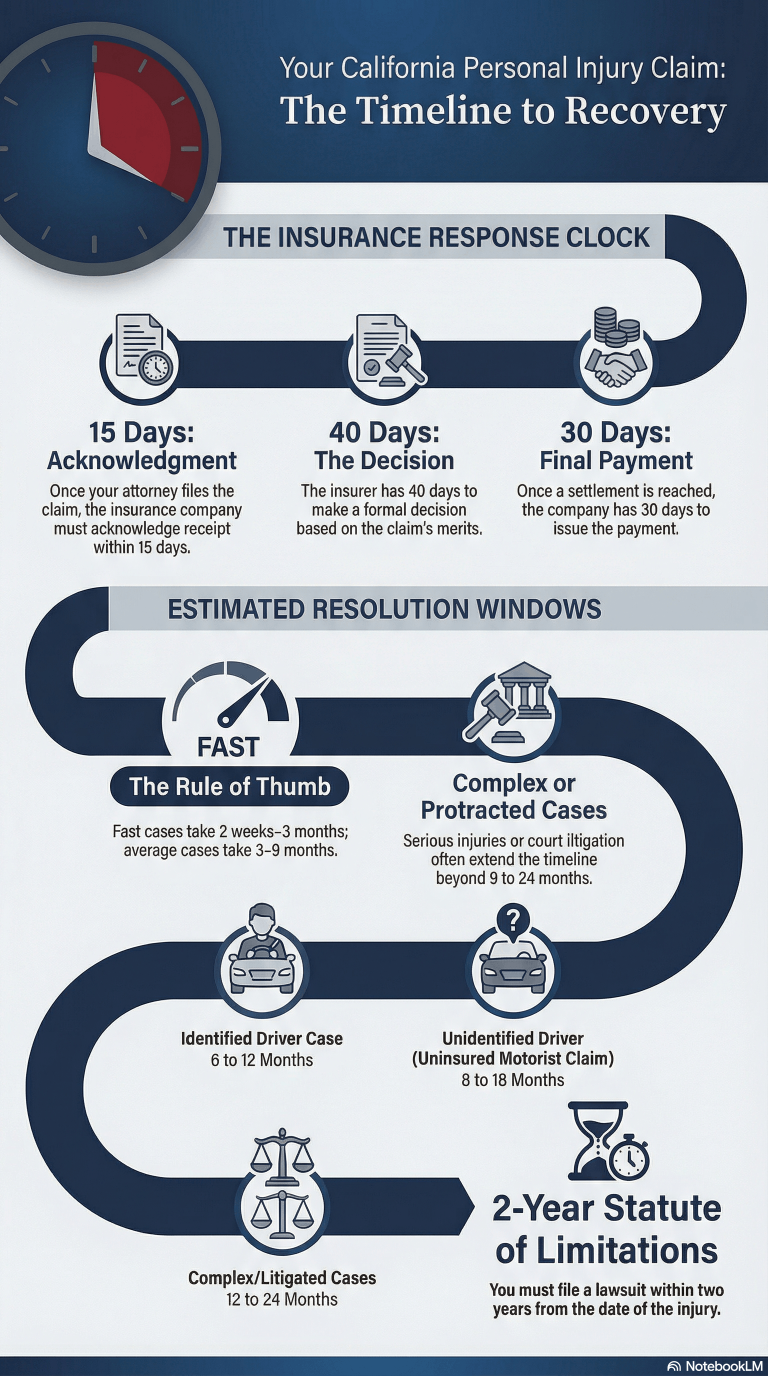
- Once your attorney files your claim with the involved insurance company, they have 15 days to acknowledge receipt.
- From here, the insurance company has 40 days to make a decision that’s based on the claim.
- Once the claim is resolved through settlement, the insurance company has 30 days to make the final payment.
This timeline can vary considerably based on the complexities of the case. The more serious your injuries are, the more likely your case is to be challenging – and the more likely it is that negotiations will be lengthy.
A good rule of thumb when it comes to how long it takes for personal injury claims to be finalized is that:
- Fast: 2 weeks to 3 months
- Average: 3 months to 9 months
- Protracted: 9 months+
If your case goes to court, of course, it’s likely to take considerably longer. It’s also worthwhile to note here that the statute of limitations – or the legal limit – for filing a lawsuit against the at-fault driver of the vehicle involved is a short two years from the date of the injury-causing accident under Code of Civil Procedure 335.1.
Legal rights in personal injury claims
California law provides robust protections for pedestrian accident victims. Your legal rights include:
- Right to seek full compensation for injuries
- Protection against unfair insurance practices
- Ability to file claims against multiple responsible parties
- Opportunity to recover damages even if partially at fault
Pedestrian fault and liability considerations
California follows a comparative negligence rule (Civil Code 1431.2), which means compensation can be adjusted based on the pedestrian’s level of responsibility. Scenarios that might impact your claim include:
- Jaywalking
- Crossing outside designated crosswalks
- Walking while intoxicated
- Ignoring traffic signals
- Distracted walking
Even if you are partially at fault, you may still recover damages, with your compensation reduced proportionally to your level of responsibility.
💬 Have Questions About Your Case?
Get a free, confidential consultation with a California attorney. No fees unless we win.
Pedestrian right-of-way laws in California
California law provides strong protections for pedestrians, especially in designated crosswalks and intersections. Under California Vehicle Code § 21950, drivers must yield the right-of-way to pedestrians crossing the road within a marked crosswalk or at an intersection, even if it’s unmarked.
However, pedestrians also have a duty of care. They must not suddenly leave a curb or walk into the path of a vehicle that is too close to stop safely, and Vehicle Code 21954 requires a pedestrian outside a crosswalk to yield. That said, if a driver is speeding, distracted, or otherwise acting negligently, even if the pedestrian wasn’t in a crosswalk, the driver may still be held at fault.
Liability and insurance considerations
Insurance plays a critical role in pedestrian accident claims. The process involves:
- Investigating the driver’s auto insurance coverage
- Exploring additional insurance sources
- Identifying potentially responsible parties
- Negotiating with insurance companies
Insurers will conduct thorough investigations to determine fault, making professional legal representation essential to protect your interests.
Statute of limitations
In California, the legal window for filing a personal injury claim is typically two years from the date of the accident., and only six months to present a claim against a public entity under Government Code 911.2. This limited timeframe underscores the importance of taking prompt legal action.
Dealing with the driver’s insurance
After a pedestrian is hit, it’s common for the at-fault driver’s insurance company to reach out quickly, sometimes within hours. While they may seem helpful, their goal is to reduce the insurer’s financial responsibility, not to help you recover fair compensation.
You are not obligated to speak to the driver’s insurer or provide a recorded statement. Doing so may damage your claim. Before you speak with any adjuster or sign any paperwork, you should speak to our pedestrian accident lawyer. We will communicate with the insurer on your behalf, ensure your injuries are documented correctly, and help you avoid common mistakes that reduce your compensation.
Insurance company tactics
Insurance companies are in the business of paying out as little as possible. In pedestrian accident cases, they may use a variety of strategies to minimize your claim, including:
- Downplaying your injuries or suggesting they were pre-existing
- Blaming you for the accident, especially if you weren’t in a crosswalk
- Offering lowball settlements before the full extent of your injuries is known
- Delaying the claim process in hopes you’ll settle out of frustration
- Requesting medical records to look for unrelated issues to deny or limit coverage
To protect yourself, keep thorough records, avoid speaking to the insurer without counsel, and contact our lawyer, who knows how to push back against these tactics effectively.
Estimate your case value instantly
Want a clearer picture of what your personal injury case might be worth? Use our free personal injury settlement calculator to get a quick, informed estimate based on your situation. While this tool can’t replace a legal evaluation, it can help you understand the potential value of your claim.
Disclaimer: This calculator provides an estimate based on general inputs and does not constitute legal advice or a guarantee of results. Settlement values can vary significantly based on facts, liability, jurisdiction, and evidence. For a more accurate assessment, please contact us for a free case review.
Additional reading: average payout for a pedestrian hit by a car in California
Our commitment to you
At Feher Law, we understand the complexity of pedestrian accident claims. Our dedicated team is committed to:
- Comprehensive case evaluation
- Aggressive representation
- Maximizing your potential compensation
- Guiding you through every step of the legal process
Call (310) 340-1112 today for a no-obligation consultation. Your path to justice and recovery starts here.
Statistics and common causes of pedestrian accidents
Pedestrian accidents continue to be a critical public safety concern in the United States. In 2022, the statistics paint a sobering picture of the risks faced by pedestrians:
- Nationally, 7,522 pedestrians were killed in motor vehicle crashes.
- An average of 21 pedestrians were killed in motor vehicle crashes every day.
- In California, 1,158 pedestrians were killed in motor vehicle traffic crashes.
- Pedestrian fatalities increased nationally by 0.7 percent between 2021 and 2022.
- Pedestrian fatalities decreased in California by 1.8 percent between 2021 and 2022.
The most common causes of pedestrian accidents include:
- Distracted driving (smartphone use, navigation systems)
- Speeding and reckless driving
- Impaired driving (alcohol or drugs)
- Poor visibility, especially during nighttime
- Failure to yield right-of-way at crosswalks
- Inadequate street lighting and infrastructure
- Drivers not paying attention in urban and residential areas
California presents a particularly challenging landscape for pedestrian safety. The high number of pedestrian fatalities underscores the critical need for increased awareness, improved infrastructure, and enhanced safety measures to protect vulnerable road users.
Common injuries from pedestrian accidents
When a pedestrian is hit by a vehicle, the injuries can be severe due to the lack of physical protection. Many victims suffer not only physical trauma but also emotional and financial consequences.
In our experience, some of the most common injuries include:
- Fractures and broken bones, especially in the legs, pelvis, or arms
- Traumatic brain injuries (TBI) from head impact with the ground or windshield
- Spinal cord injuries, including herniated discs or permanent paralysis
- Soft tissue injuries, such as torn ligaments, whiplash, and muscle damage
- Internal injuries to organs from blunt force trauma
- Psychological trauma, including anxiety, PTSD, and depression
Each injury has different medical and financial implications, all of which should be thoroughly documented if you intend to pursue a claim.
| Injury Type | Description | Estimated Recovery Time | Impact on Compensation |
|---|---|---|---|
| Broken bones | Fractures of limbs, ribs, or pelvis | 6 weeks – 6 months | Medium to high |
| Traumatic brain injury | Concussions to severe brain damage | Months to lifelong | Very high |
| Spinal injuries | Includes disc injuries and partial paralysis | Variable | Very high |
| Soft tissue injuries | Whiplash, bruises, sprains | 2 weeks – 3 months | Low to moderate |
| Internal injuries | Organ damage, internal bleeding | Variable | High |
| Lacerations & road rash | Surface skin injuries and scarring | 1 week – 2 months | Low to moderate |
| Emotional trauma | PTSD, anxiety, or depression | Variable | May increase non-economic claim |
How we’ve helped pedestrians after they’ve been struck by a vehicle
Our commitment to our clients’ rights, rightful compensation, and well-being is reflected in the reviews and testimonials they share, including the following excerpts:
- Knowledgeable, professional experts . . . highly recommend
- Their professionalism, attention, and care are outstanding.
- Their great efforts and service give me peace of mind.
- These people jump through hoops to take care of you!
- They went above and beyond to get me what I deserved.
These tributes speak to the difference we make in our clients’ lives, and we take great pride in their appreciation.
Let Us Help You Secure the Maximum Compensation You Deserve
If you’ve been injured in a pedestrian accident, your health, financial stability, and future may all be at risk. As a trusted personal injury lawyer team serving every pedestrian in California, Feher Law delivers focused legal representation designed to protect your rights and maximize your recovery.
We are prepared to guide you through every stage of the legal process – from identifying the negligent driver to negotiating a fair settlement or pursuing litigation when necessary. The physical pain and emotional strain after a pedestrian accident can make it difficult to advocate for yourself, which is why our attorneys step in to pursue the full compensation you deserve aggressively.
At Feher Law, we are committed to standing up for injured pedestrians and fighting for justice on their behalf. Contact us today to discuss your case and take the first step toward securing the compensation and peace of mind you deserve.
We welcome the opportunity to fight for your rights, so please don’t wait to contact us today.
Our key takeaways
If you’ve been involved in a pedestrian accident, remember:
- Prioritize your health and immediate medical needs
- Document everything meticulously
- Contact a specialized pedestrian accident attorney immediately
- Understand your legal rights and potential compensation
- Do not communicate with insurance companies without legal representation
Take action now!
Time is of the essence. The complexity of pedestrian accident claims requires immediate, professional legal intervention. You don’t have to go through this challenging process alone.
Call Feher Law today at (310) 340-1112 for a comprehensive, no-obligation consultation. Our dedicated team is committed to securing the maximum compensation you deserve.
Your road to recovery starts with one important step – reaching out to experienced legal professionals who will fight tirelessly for your rights.
FAQs on what to do after a pedestrian accident
What if the driver who hit me doesn’t have insurance?
If the driver is uninsured, you may still be able to recover compensation for your injuries through your own uninsured/underinsured motorist (UM/UIM) coverage, which Insurance Code 11580.2 requires insurers to offer. California law requires insurers to offer this protection. An attorney can help you file the claim correctly and negotiate the highest possible payout from your provider.
Can I still sue if I wasn’t in a crosswalk?
Yes. While crosswalks offer stronger legal protection, drivers still owe a duty of care to all pedestrians. If the driver was speeding, distracted, or failed to yield, you may still have a valid claim. Your fault may be reduced by comparative negligence, but it doesn’t bar compensation.
How do I get medical treatment if I can’t afford it?
If you don’t have insurance or can’t afford treatment, a personal injury attorney may be able to help you obtain care on a medical lien. This means providers agree to be paid from your settlement later, allowing you to get necessary treatment without upfront out-of-pocket expenses.
Will giving a recorded statement hurt my case?
Yes, it can. Insurance adjusters often use recorded statements to minimize your claim or assign blame unfairly. It’s best to speak with an attorney first, who can communicate on your behalf and ensure you don’t say anything that might weaken your right to full compensation.
What if I didn’t file a police report at the scene?
While a police report is helpful, you can still file a claim without one. Your attorney can use medical records, witness statements, traffic camera footage, and other evidence to build your case. It’s important to document your injuries and speak with legal counsel as soon as possible.
What if I delayed medical care?
Delaying treatment can make it harder to prove your injuries are tied to the accident, especially if you did not experience noticeable symptoms right away. Insurance companies often use gaps in care to dispute the seriousness or cause of injuries. Even so, a strong medical record and legal support can still protect your claim.
What if I was jaywalking?
How long do pedestrian cases take in California?
Pedestrian accident cases in California may resolve in a few months or extend beyond a year depending on injury severity, evidence strength, and insurance negotiations. Straightforward claims often settle faster, while complex cases can take longer if litigation is required. An experienced injury lawyer can help move your case forward efficiently.
Related reading: what to do after a bus accident in California
Related reading: step-by-step California personal injury claim process
What if the driver fled?
If the driver fled the scene, you may still pursue compensation through uninsured motorist coverage or other insurance options. Police investigations, witness accounts, and surveillance footage may help identify the responsible party. Acting quickly to report the accident can strengthen your ability to recover damages.
Estimate your case value: Use our free California Personal Injury Settlement Calculator for a quick estimate of what your case could be worth, or speak directly with a Torrance personal injury lawyer for a personalized review.
Last reviewed by Thomas Feher, Esq. – September 2026