Bakersfield Police Have Not Said Whether Lights or Siren Were On When a Patrol Vehicle Struck Fatima Scarlet Morales on White Lane
BAKERSFIELD, CALIFORNIA (November 8, 2026) – A 23-year-old woman identified as Fatima Morales was killed in a pedestrian accident involving a Bakersfield Police Department vehicle in southwest Bakersfield.
Kern County officials are saying that the crash occurred around 2:40 a.m. on Saturday, October 31. Fatima Morales was in the 7700 block of White Lane when an officer driving east while responding to a call struck her, according to KGET.
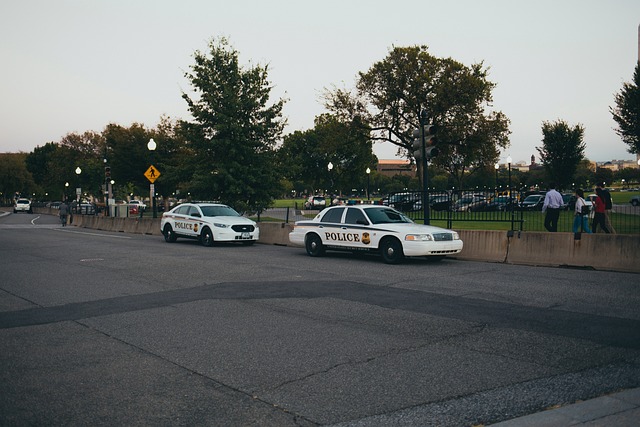
Police allege that Morales walked directly into the path of the patrol vehicle and was not using a crosswalk. The department has not said whether the vehicle’s overhead lights or siren were activated, or how fast the officer was traveling.
Emergency responders were called to the scene, but Fatima Morales died there from her injuries, according to the Kern County coroner. Anyone with information about the crash is asked to call the Bakersfield Police Department at 661-327-7111.
Nearby stretches of White Lane carry three lanes of traffic in each direction, separated by a raised median, with a 55-mile-per-hour speed limit, according to 23ABC. This is also not the first time a Bakersfield patrol car has struck and killed someone on foot.
In 2024, a 27-year-old man was killed by a BPD vehicle on South Union Avenue, and a lawsuit later filed over his death alleged negligence by police and claimed the city failed to keep the roadway safe. Whether the officer in this crash was operating under emergency rules, and whether the call justified that kind of response, remain open questions that dispatch records and vehicle data could answer.
Liability for Bakersfield Police Vehicle Accidents
California holds public agencies responsible for injuries and deaths caused by an employee’s negligent operation of a motor vehicle within the scope of employment under Vehicle Code section 17001. Officers responding to emergencies may set aside certain rules of the road, but only when the vehicle displays a lighted red lamp and sounds a siren as reasonably necessary. Even then, state law makes clear that the exemption does not relieve a driver of the duty to drive with due regard for the safety of everyone using the road. Separate provisions can shield an individual officer from personal liability, but they do not automatically protect the city or county that employs the officer. Several recurring questions tend to decide responsibility in these crashes.
- Warning Devices: Whether the red light and siren were activated determines whether the emergency exemption applies at all.
- Speed: Even a lawful emergency response must be driven at a speed that leaves the officer time to react to people in the roadway.
- Visibility: Darkness, street lighting, and headlight range all bear on whether a person on foot could reasonably have been seen.
- Department Policy: Agency rules on when officers may drive with lights and siren show what a reasonable emergency driver is expected to do.
- Recorded Evidence: Dash camera video, body camera footage, vehicle data recorders, and dispatch logs often reveal exactly how a patrol car was driven.
The California Supreme Court addressed these rules in Brummett v. County of Sacramento (1978). Two sheriff’s deputies chasing a suspected bank robber at speeds approaching 90 miles per hour entered an intersection, and one patrol car crashed into the plaintiffs’ pickup truck waiting in a turn lane. The court found the deputies personally immune because they were in active pursuit, but it reversed the judgment for the county, holding that Vehicle Code section 17001 makes the public employer liable when an employee’s driving is negligent. It explained that the test is what a reasonable, prudent emergency driver would do under all of the circumstances, including the emergency itself. Under that standard, a public agency can be held accountable whenever an officer’s driving falls short of the care the law requires, even on an urgent call.
Why Nighttime Roads Are So Dangerous for People on Foot
People walking face their greatest risk after dark. According to the National Highway Traffic Safety Administration, 7,314 pedestrians were killed in U.S. traffic crashes in 2023, and 77 percent of those deaths happened in the dark. The Governors Highway Safety Association reported that the pattern held in 2024, when 76.5 percent of pedestrian deaths with known lighting conditions occurred after dark. Wide, multilane roads add to that danger because vehicles travel faster and drivers have less time to perceive someone ahead. Several factors commonly shape the outcome of a nighttime pedestrian crash.
- Street Lighting: Gaps in overhead lighting make it harder for any driver to detect a person in the roadway in time to stop.
- Sidewalks: In 2024, 62.2 percent of pedestrian deaths occurred in locations without a sidewalk, according to the GHSA analysis.
- Speed: Higher travel speeds lengthen stopping distances and increase the force of an impact.
- Driver Attention: In 2024, 21.7 percent of pedestrian fatalities involved a distracted driver, up from 15.6 percent in 2019.
- Crossing Gaps: Long distances between signalized crossings on major roads can leave people on foot with few protected places to cross.
Government vehicles share these roads, and the people driving them are trained to account for these risks. When an agency’s driver fails to do so, the law does not treat the badge as a shield for the agency. Families of people killed by public vehicles have the right to pursue accountability, to demand the records that show what happened, and to insist that the agency explain its decisions. Transparency in these investigations protects not only the families involved but every person who walks along a busy road at night.
Investigating Police Vehicle Accidents in Bakersfield
We at Feher Law extend our deepest condolences to the family and loved ones of Fatima Morales. We hope a thorough and transparent review leads to accountability and to policy changes that better protect pedestrians when officers respond to calls. This tragedy raises serious safety concerns about emergency driving on high-speed Bakersfield roads. Were the patrol vehicle’s warning lights and siren on, and was it moving at a speed that allowed time to react?
Have you or a loved one been affected by a pedestrian accident involving a police or government vehicle in Bakersfield or elsewhere in Kern County? California law makes public agencies answer for the driving of their employees, including officers on calls. The agency involved, however, typically holds the dash camera video, dispatch audio, and vehicle data that show how events unfolded, and its early statements may reflect only its own version. Our team of safety advocates and accident investigators can help you understand what happened by examining body camera footage, crash data, and accounts from independent witnesses. If you have questions about your rights or would like a free, independent investigation, we are here for you anytime at (424) 433-4412.