Bernard Deshawn Douglas Shot by LAPD Officers After Less-Lethal Rounds Failed Near Fourth and Omar Streets
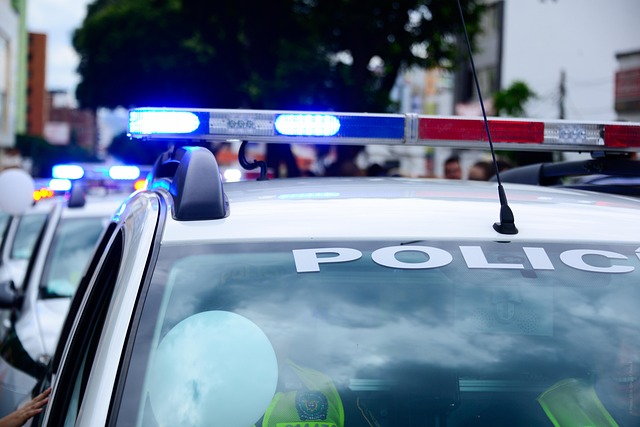
DOWNTOWN LOS ANGELES, CALIFORNIA (November 5, 2026) – A 48-year-old man identified as Bernard Douglas was injured in a police shooting near East Fourth Street and Omar Street in downtown Los Angeles.
Los Angeles County officials are saying that the shooting occurred around 1:25 p.m. on Saturday. Bernard Douglas was in the area when Central Division officers responded to a radio call for a robbery suspect, and an LAPD air unit directed them to him, according to the department.
Police said Douglas was holding a roughly four-foot metal pole with a bladeless tree-pruning shear attached and a tree branch of similar length. According to LAPD, he did not comply with commands to drop them and instead turned toward officers and raised them overhead.
Officers fired 40mm less-lethal rounds, which the department said were ineffective. Police allege Douglas then advanced and struck an officer on the left arm and shoulder with the pole, and officers opened fire.
Douglas was hit by gunfire and tried to walk away before an officer used a Taser and he collapsed. Officers rendered aid until Los Angeles Fire Department paramedics arrived and took Bernard Douglas to a hospital, where he was later listed in stable condition.
The injured officer was treated at a hospital and released. LAPD later identified the officers involved as Lesley Castillo and Jessie Tavares.
The shooting comes as LAPD shootings have climbed sharply. Officers opened fire in 47 incidents in 2025, up from 29 the year before and the most since 2015, Crosstown reported.
Under the city’s critical incident video policy, body camera and air unit footage of police shootings is generally released within 45 days. That video may help show how much time and distance officers had, what commands were given, and whether other options were available after the less-lethal rounds failed.
Liability for Downtown Los Angeles Police Shooting
California law sets one of the strictest deadly force standards in the country. Under Penal Code section 835a, officers may use deadly force only when they reasonably believe it is necessary to defend against an imminent threat of death or serious bodily injury, judged by the totality of the circumstances, including officers’ own conduct leading up to it. The Fourth Amendment separately protects people from unreasonable seizures, which include police shootings. Under Government Code section 815.2, a public entity such as a city can be held liable for injuries caused by employees acting within the scope of their jobs. Reviews of police shootings often focus on:
- De-escalation: Officers are expected to use time, distance, and communication to slow down an encounter when it is safe to do so.
- Less-lethal options: Investigators look at which intermediate tools were available and how they were used before firearms.
- Tactical planning: Positioning, cover, and coordination among officers can determine whether deadly force ever becomes necessary.
- Medical aid: Prompt first aid and a fast call for paramedics can affect how serious a gunshot injury becomes.
- Video evidence: Body cameras, air unit footage, and nearby business cameras often capture timing and distance more precisely than written reports.
California’s highest court has made clear that what happens before shots are fired matters. In Hayes v. County of San Diego (Cal. 2013), sheriff’s deputies responded to a home to check on a man reported to be suicidal, and they shot and killed him when he came toward them holding a large knife. His daughter sued, arguing the deputies’ approach had been negligent. The California Supreme Court held that officers’ tactical conduct and decisions leading up to deadly force are part of the totality of circumstances used to decide whether that force was reasonable under negligence law. The ruling means a shooting that might look justified in its final seconds can still give rise to liability if poor planning or tactics helped create the danger.
Understanding Police Use of Force Data in California
California requires every law enforcement agency to report incidents in which officers fire their weapons or use force that causes serious injury or death. In 2025, agencies reported 619 such incidents to the California Department of Justice, including 242 that involved the discharge of a firearm. Of the 633 civilians involved, 204 were struck by gunfire and 127 died, while officers perceived 337 civilians as armed and 279 were confirmed to be armed. Los Angeles County accounted for 185 of the reported incidents, nearly 30 percent of the state total. People injured in these encounters and their families can take several practical steps to protect their rights:
- Request records: California public records laws give the public access to many reports and recordings involving police shootings.
- Medical documentation: Hospital records, imaging, and follow-up care notes help establish the full extent of injuries.
- Witness accounts: People who saw or recorded the encounter may remember details that official statements leave out.
- Video preservation: Footage from nearby businesses and phones can be overwritten or deleted if no one asks for it quickly.
- Independent review: An outside look at policies, training, and tactics can show whether an agency followed its own rules.
Police shootings raise serious questions about public safety and accountability. Departments are expected to train officers to avoid deadly force whenever possible and to review every shooting thoroughly and transparently. Early accounts from a police agency are preliminary and can change as video and forensic evidence come to light. People who are injured by police have the right to a full and fair review of what happened, and they may be entitled to compensation for medical care, lost income, and the lasting effects of their injuries.
Investigating Police Shootings in Los Angeles
We at Feher Law wish a full and speedy recovery to Bernard Douglas. We hope this incident leads to transparency and to safer approaches for encounters that turn tense. This shooting raises serious safety concerns about how officers respond when less-lethal tools do not work. What other options did officers have once the less-lethal rounds failed to end the encounter?
Have you or a loved one been hurt in a police shooting in downtown Los Angeles or elsewhere in Los Angeles County? The law limits when officers may use deadly force, and people injured outside those limits may be entitled to compensation for medical bills, lost wages, and ongoing care. Early accounts of police shootings often come from the department itself and may change as more evidence surfaces. Our team of safety advocates and accident investigators can help you understand what happened, from body camera and air unit footage to dispatch records and witness accounts of the moments before shots were fired. For answers to questions about your rights or a free, independent investigation, we are here for you at (424) 433-4412.
Other News
- https://feherlawfirm.com/news/guillermo-verganza-dies-in-ice-custody-at-otay-mesa-detention-center/
- https://feherlawfirm.com/news/matthew-shelton-convicted-of-abusing-students-at-robert-semple-elementary-in-benicia/
- https://feherlawfirm.com/news/nicolas-lopez-killed-in-san-francisco-hit-and-run-accident/