LAPD Cruiser Responding to a Halloween Party Call Strikes and Kills Kristine Poulos on Woodman Avenue
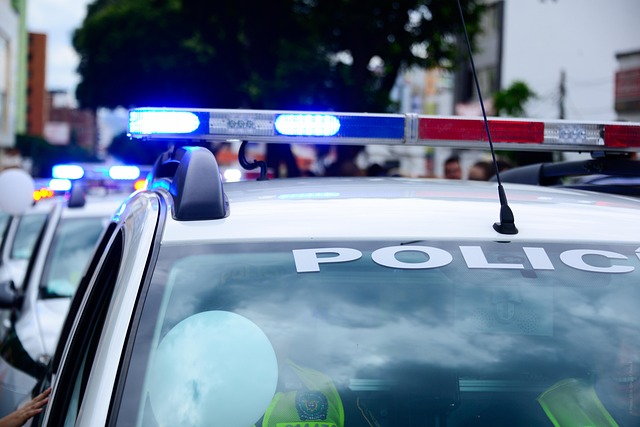
VAN NUYS, CALIFORNIA (November 4, 2026) – A 32-year-old woman identified as Kristine Poulos was killed in a pedestrian accident involving a Los Angeles Police Department patrol car in Van Nuys.
Los Angeles County officials are saying that the crash occurred around 11:30 p.m. on Saturday. Kristine Poulos was crossing Woodman Avenue near Bessemer Street when she was struck by a North Hollywood Division patrol car that was responding to an emergency call with its lights and siren activated, according to the Los Angeles Police Department, MyNewsLA reported.
The officer was on the way to provide backup at a crowded Halloween house party on Weddington Street in Sherman Oaks, where police had received a call of shots fired, according to ABC7. A nearby resident who heard the impact saw the cruiser stopped sideways in the street, and paramedics were called.
Kristine Poulos was pronounced dead at the scene. Rain had fallen that evening, and it remains unclear whether wet roads played a role, while police later broke up the party and it was unclear whether any evidence of gunfire was found.
Her sister, Naomi Portillo, has organized a GoFundMe to help the family give Kristine the peaceful burial she deserves.
This is not the first time an LAPD cruiser on an emergency call has struck and killed someone on foot. In September 2025, a 30-year-old man named Gerardo Estrada was killed in Highland Park by a patrol car responding with its lights and siren on, and an LAPD captain acknowledged afterward that officers exempt from traffic rules must still drive with due care, CBS Los Angeles reported.
Questions remain about how fast the cruiser was traveling on Woodman Avenue and whether darkness and wet pavement were factored into the speed of the response.
Liability for Van Nuys Police Car Accidents
California lets drivers of emergency vehicles disregard certain traffic laws when responding to an emergency call with a red light and siren, under Vehicle Code section 21055. That privilege has limits, because Vehicle Code section 21056 makes clear the exemption does not relieve the driver of the duty to drive with due regard for the safety of everyone using the road. A separate statute, Vehicle Code section 17004, shields individual officers from personal liability while responding to an emergency. However, section 17001 makes a public entity liable for death or injury caused by an employee’s negligent operation of a motor vehicle within the scope of employment. When reviewing whether an emergency driver met that standard, investigators and courts often examine several factors:
- Speed: Speed is measured against traffic, lighting, weather, and the type of street.
- Warnings: Courts look at whether lights and siren were activated early enough to give drivers and pedestrians a real chance to react.
- Visibility: Darkness, rain, and glare affect how far ahead a driver can see someone in the roadway.
- Training: Agency policies govern when officers may drive with lights and sirens and how they must slow near intersections and crossings.
- Vehicle data: Event data recorders, GPS logs, and dash camera footage can reconstruct speed and braking in the seconds before a collision.
California’s highest court has explained how these laws fit together. In Brummett v. County of Sacramento, decided by the California Supreme Court in 1978, a sheriff’s patrol vehicle collided with the victim during a high-speed pursuit of a suspected felon. The court held that the deputies were personally immune under section 17004, but the county could still be held liable under section 17001 if its officers failed to exercise due care for the safety of others on the road. Later, in City of San Jose v. Superior Court in 1985, a state appellate court confirmed that sections 21055 and 21056 set the driving standard for emergency vehicles, while the public entity answers for any failure to meet it. Together, these decisions hold agencies responsible when urgency replaces care.
Emergency Vehicles and Pedestrian Safety
Emergency vehicles save lives, but a fast response also creates real risks for everyone nearby. According to the National Safety Council, 225 people died in crashes involving emergency vehicles in 2024. Pedestrians accounted for 24% of those deaths, and crashes involving police vehicles accounted for 150 deaths, more than ambulances and fire trucks combined. People on foot often have little time to react when a fast-moving vehicle approaches:
- Sirens: Rain, traffic noise, and closed windows can muffle a siren, so a pedestrian may hear it only seconds before a vehicle arrives.
- Night crossings: Dark clothing and wet pavement shorten how far a driver can see a pedestrian, especially on wide streets with fast traffic.
- Driver duty: Emergency drivers are expected to slow at intersections and scan for people on foot, even after other traffic has pulled over.
- Response codes: Not every call requires lights and sirens, and agencies set rules for which emergencies justify a high-speed response.
- Records: Dispatch logs, radio traffic, and response codes show whether a response followed agency policy.
Public agencies have a strong interest in reaching emergencies quickly, but that interest does not outweigh the lives of people on the street. Departments that send officers through neighborhoods at high speed carry a duty to train, supervise, and review how those responses are handled. Families who lose someone in a crash with a government vehicle have the right to a complete and honest account of what happened. They also have the right to pursue accountability from the agency responsible.
Investigating LAPD Pedestrian Accidents in Van Nuys
We at Feher Law extend our deepest condolences to the family and friends of Kristine Poulos. We hope this tragedy leads to full transparency and to safety changes that protect pedestrians whenever officers respond to an emergency. This crash raises serious safety concerns about high-speed police responses through neighborhood streets at night and in the rain. What does a safe emergency response look like when the road ahead is dark, wet, and shared with people on foot?
Have you or a loved one been affected by a pedestrian accident involving a police car in Van Nuys or elsewhere in the San Fernando Valley? Families who lose someone in a crash with a government vehicle are entitled to learn exactly how it happened and to hold the responsible agency accountable. When a police department is involved, that same department usually controls the dash camera footage, dispatch records, and vehicle data that tell the story. Our team of safety advocates and accident investigators can help you understand what happened, from patrol car speed data and radio logs to witness accounts and nearby security cameras. We offer answers to your legal questions and help understanding your next steps, and we’re available anytime at (424) 433-4412.