NEJM Evidence Report Documents 592 Silicosis Cases Among California Quartz Countertop Workers, Including 65 Lung Transplants and 31 Deaths
LOS ANGELES, CALIFORNIA (November 20, 2026) – A new report published in NEJM Evidence found that 592 California workers developed silicosis, an incurable lung disease, after cutting and finishing engineered stone countertops.
California public health officials are saying that the cases were identified between January 2019 and June 2026, and the findings were published on Wednesday, August 12, 2026. Of those workers, 65 underwent lung transplants and 31 died, according to the published report.
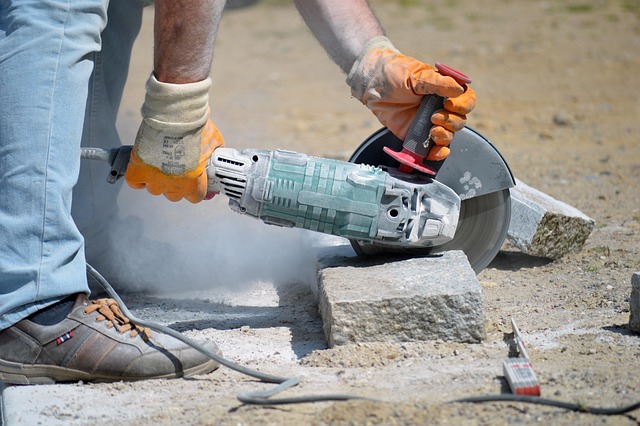
Engineered stone, commonly sold as “quartz,” typically contains more than 90% crystalline silica, according to George Washington University. Cutting, grinding, and polishing the slabs releases fine silica dust, which workers can breathe deep into their lungs, where it leaves permanent scarring.
All but one of the 592 workers were men, and 98% were Latino, Newsweek reported. The median age at diagnosis was 46, the median age at death was 52, and 138 workers were referred for lung transplant evaluation.
California’s first known case was identified in January 2019, involving a worker who was diagnosed at 32 and died of respiratory failure at 38. A follow-up investigation found two more cases among former workers at the same company, and screening of 43 current employees found five more.
The authors, from the California Department of Public Health, UCLA, UCSF, and George Washington University, warned that the true number of cases is likely much higher. Screening is inconsistent, and workers are often first misdiagnosed with tuberculosis, pneumonia, or sarcoidosis, according to the report.
Co-author David Michaels, a former head of federal OSHA, said the California count suggests there are likely thousands more cases across the country, according to HealthDay. Many patients also develop autoimmune disease or tuberculosis, and their disease often progresses quickly after diagnosis.
The toll has continued to climb since the study’s cutoff. By September 16, 2026, the California Department of Public Health had identified 644 cases, at least 35 deaths, and 75 lung transplant recipients, and KQED reported in November that more than 680 stoneworkers have now been diagnosed.
Los Angeles County has been the center of the outbreak, accounting for 226 of the 432 confirmed cases the state had counted by November 2025, according to a state health advisory. Orange County had the next-highest total, with 86 cases.
Questions remain about whether existing safety rules are being followed in the more than 1,300 countertop shops operating statewide. When state health officials reviewed 62 recent Cal/OSHA inspections, 77% of employers had been cited for at least one silica violation, and 27% received an order prohibiting use, according to the health department’s letter to regulators.
In October 2026, two separate California juries found Caesarstone’s engineered stone products defective in silicosis trials, and one rejected the company’s misuse defense, Business Insurance reported. Meanwhile, manufacturers have backed a bill in Congress that would shield them from hundreds of lawsuits filed by sick stonecutters, according to KQED.
California’s workplace safety board voted in May to begin emergency rulemaking on a ban of engineered stone containing more than 1% crystalline silica, and the latest draft rule would bar its fabrication and installation statewide. Whether that ban arrives soon enough for workers still cutting these slabs today remains an open question.
Liability for Silicosis Cases in Los Angeles
California product liability law holds manufacturers responsible when a product is defectively designed or sold without adequate warnings about its dangers. Those duties extend beyond the finished product to the companies that supply raw materials, slabs, and other industrial products that workers handle every day. Employers carry their own obligations under California’s silica standard, which requires specific dust controls, respiratory protection, exposure monitoring, and medical exams for high-exposure work. Although Labor Code section 3602 generally routes workplace injury claims against employers through the workers’ compensation system, it does not protect outside manufacturers, distributors, or suppliers from being held accountable. In silicosis cases, responsibility often turns on several recurring questions:
- Design: Whether a product’s composition, such as extremely high crystalline silica content, made it more dangerous than necessary when safer alternatives were available.
- Warnings: Whether manufacturers and distributors gave fabrication shops and workers clear warnings about silica dust and the protections needed, in a language workers could understand.
- Supply chain: Distributors and suppliers who place a hazardous product into the stream of commerce may share responsibility with the company that made it.
- Shop controls: Employers must use wet cutting methods, approved respirators, regular air monitoring, and medical surveillance for workers who perform high-exposure tasks.
- Records: Safety data sheets, product composition data, air sampling results, and medical exam records often show what each company knew and when.
Courts have also addressed how far a supplier’s duty reaches when workers are exposed to dust during industrial work. In Ramos v. Brenntag Specialties, Inc. (2016), the California Supreme Court considered a claim by a metal foundry worker who developed interstitial pulmonary fibrosis after decades of working around metals, sand, plaster, limestone, and marble supplied by outside companies. The trial court had dismissed the case under the “component parts” doctrine, which can protect suppliers whose products are incorporated into someone else’s finished goods. The Supreme Court disagreed, holding that the doctrine does not shield suppliers when a worker is harmed by using their products in the manner the suppliers intended during the manufacturing process. That principle matters for anyone injured while cutting, shaping, or finishing materials in an industrial setting, because the companies that supplied those materials can still be asked to answer for the hazards they created.
When Employers Hide a Worker’s Illness
Workers’ compensation is usually the only path for holding an employer responsible for a workplace illness, but California law recognizes an important exception. Under Labor Code section 3602, subdivision (b)(2), an employee can bring a civil action when the employer fraudulently concealed an existing injury and its connection to the job, and that concealment made the injury worse. The employer’s liability in that situation covers the harm caused by the aggravation, rather than the original illness. Courts have held that the employer must have actual knowledge of the injury, and that a showing of what the employer should have known is not enough, as explained in Hughes Aircraft Co. v. Superior Court (1996). Claims under this exception generally depend on a few key elements:
- Knowledge: The employer actually knew the worker had a job-related injury or illness.
- Concealment: The employer hid that injury, or its connection to the work, from the employee.
- Aggravation: The concealment caused the condition to worsen, often because the worker kept being exposed or delayed treatment.
- Evidence: Company medical screening results, internal health records, and communications can show what an employer knew and what it chose to share.
This exception grew out of Johns-Manville Products Corp. v. Superior Court (1980), a California Supreme Court decision involving a man who worked for an asbestos products company for 29 years. He alleged that the company knew about the dangers of long-term asbestos exposure, and that it concealed his disease from him even as physicians it retained examined him, so he kept working while his condition grew worse. The court held that while workers’ compensation barred a civil action for the initial injury, the employee could pursue a claim for the aggravation caused by the employer’s fraudulent concealment. The Legislature later wrote that rule into the Labor Code. The decision remains a foundation for occupational lung disease claims where workplace screening uncovered an illness that was never disclosed to the worker.
Recognizing Silicosis in Stone Fabrication Workers
Silicosis tied to engineered stone tends to strike workers far earlier and harder than the silicosis seen in older industries. Using surveillance data from 2019 to 2024, the California Department of Public Health found the median age at diagnosis was 46 for engineered stone workers, compared with 65 for workers exposed in sandblasting, mining, and cement-related industries. About a quarter of the engineered stone cases were referred for lung transplant evaluation, and among those who died, the median time from diagnosis to death was two years. The CDC has noted that silicosis deaths among adults aged 15 to 44 suggest acute or accelerated disease, rather than the slow-developing form usually seen in older workers. Because the disease can advance before symptoms become severe, knowing the warning signs is critical:
- Symptoms: A persistent cough and shortness of breath are the most common complaints, though some workers have no symptoms at all, according to state health officials.
- Imaging: Doctors evaluating at-risk workers are advised to order a chest X-ray or chest CT scan, even when the worker feels well.
- Lung testing: Spirometry and diffusing capacity tests help measure how much the scarring has affected breathing.
- Misdiagnosis: Silicosis is often first mistaken for pneumonia, tuberculosis, asthma, or sarcoidosis, so patients should tell every doctor about past countertop or stone work.
- Reporting: Silicosis is now a reportable disease in California, and providers must report identified or suspected cases to the local health department within seven days.
Early diagnosis does not reverse silicosis, but it can help workers end their exposure, get specialist care, and plan for treatment options such as transplant evaluation. It also creates a medical record that links the illness to the work that caused it. Many affected stoneworkers are uninsured or underinsured and are first seen in emergency rooms or urgent care clinics, which makes a clear work history even more important. Workers and families have a right to know what caused the illness and which companies exposed them to the dust. They also have the right to hold accountable the manufacturers, suppliers, and employers whose choices contributed to the harm.
California’s Silica Safety Rules for Fabrication Shops
Federal OSHA’s silica standard caps worker exposure at 50 micrograms of respirable crystalline silica per cubic meter of air, averaged over an eight-hour day. California goes further for engineered stone. Its silica standard, amended in 2025, applies its strictest rules to artificial stone containing more than 0.1% crystalline silica, and treats cutting, grinding, polishing, and cleanup as high-exposure tasks. Even so, Cal/OSHA inspections in 2019 and 2020 found silica exposure above the legal limit in more than half of inspected workplaces, and recent inspections found at least one worker over the limit in 39% of workplaces with monitoring, according to the state health department. For shops handling high-silica materials, the rules include the following requirements:
- No dry methods: Compressed air, dry sweeping, and dry shoveling of silica dust are prohibited, and waste must be cleaned up with wet methods or HEPA-filtered vacuums.
- Wet cutting: Water must cover the entire point where the tool meets the material, and recycled water must be filtered before reuse.
- Respirators: Workers performing high-exposure tasks generally must use powered air-purifying respirators or equivalent protection inside marked regulated areas.
- Medical exams: Exposed workers must receive initial and periodic exams that include chest imaging, lung function testing, and tuberculosis screening.
- Case reporting: Employers must report a confirmed silicosis or lung cancer case to the state within 24 hours of learning about it.
California lawmakers added another layer in 2025 with Senate Bill 20, which bans dry cutting and other high-exposure practices, requires wet methods and training, and strengthens reporting and enforcement. These rules matter because each requirement creates a record of whether a shop actually protected its workers. When dust controls are missing, respirators are inadequate, or medical exams are skipped, those failures can help explain how a preventable disease took hold. State health officials have also identified more than 30 lower-silica countertop products sold in California showrooms, showing that safer materials are available. Workers who were exposed despite these protections have the right to seek accountability from every party that failed to keep the dust out of their lungs.
Time Limits for Silicosis Claims in California
Silicosis can take years to develop, so California sets the deadline for toxic exposure claims based on when a person learned, or should have learned, about the illness and its cause. Under Code of Civil Procedure section 340.8, a person generally has two years from the date of injury, or two years from when they became aware of the injury, its physical cause, and enough facts to suspect someone else’s wrongful conduct played a role, whichever is later. A similar rule applies to wrongful death claims, which generally must be filed within two years of the death or the family’s discovery of its cause. The statute also states that media reports about a hazardous substance do not, on their own, start the clock. Several practical points follow from these rules:
- Diagnosis date: The date a doctor connects lung disease to silica exposure is often central to when the deadline begins.
- Misdiagnosis: Time spent being treated for the wrong condition, such as tuberculosis or pneumonia, may affect when a worker reasonably learned the true cause.
- Family claims: Spouses, children, and other family members who lose a loved one to silicosis face their own two-year deadline tied to the death.
- News coverage: Hearing about silicosis in the news does not by itself mean a worker knew enough to bring a claim.
- Employment records: Pay stubs, shop names, and coworker contacts help establish where and when exposure happened, which matters for any claim.
Deadlines in occupational disease cases can be harder to pin down than in a typical injury case, because illness often appears long after exposure begins. Workers frequently move between several fabrication shops over their careers, which can make it difficult to trace which products and employers were involved. Language barriers and limited access to health care can also delay a correct diagnosis. Families should not assume that too much time has passed simply because the exposure happened years ago. Understanding when the clock started is often the first step in protecting the right to seek accountability.
Investigating Silicosis Cases in California
We at Feher Law send our deepest condolences to the families of the countertop workers who have died from silicosis, and our best wishes to the hundreds more living with the disease across California. We hope that regulators, manufacturers, and employers act quickly so that no more workers lose their health or their lives to dust from the materials they cut. This growing epidemic raises serious concerns about workplace safety across the stone fabrication industry. Why are so many workers still breathing dangerous levels of silica dust years after the hazards of engineered stone became widely known?
Have you or a loved one been diagnosed with silicosis after cutting or installing countertops in Los Angeles or elsewhere in Southern California? Workers and families can hold the manufacturers, suppliers, and employers who exposed them to silica dust accountable for the harm. The product formulas, air monitoring results, and medical screening records that show who knew about the danger are usually held by the companies themselves, and each may point the finger at someone else. Our team of safety advocates and accident investigators can help you understand what happened, from slab composition data and safety data sheets to shop inspection histories and the accounts of former coworkers. For answers to legal questions or help understanding your options, we’re here for you anytime at (424) 433-4412.
Frequently Asked Questions About Silicosis
What is engineered stone silicosis?
Silicosis is a lung disease caused by breathing in respirable crystalline silica dust, which scars the lungs over time. Engineered stone, often sold as “quartz,” typically contains more than 90% crystalline silica, so cutting, grinding, and polishing it can release large amounts of hazardous dust, according to George Washington University. The scarring cannot be reversed, which is why the disease is considered incurable.
How quickly can silicosis develop in countertop workers?
Engineered stone silicosis often appears much earlier than other forms of the disease. California health officials found a median age at diagnosis of 46 for engineered stone workers, compared with 65 for workers exposed in mining, sandblasting, and cement-related industries, according to the state health department. Among engineered stone workers who died, the median time from diagnosis to death was two years.
What are the symptoms of silicosis?
The most common symptoms are a persistent cough and shortness of breath, though some workers have no symptoms when the disease is first found. Others may experience chest or back pain, fatigue, weight loss, fever, night sweats, or repeated respiratory infections, Newsweek reported. Anyone who has worked in a countertop shop should tell their doctor about that work, even if they feel healthy.
Is natural stone safer than engineered stone?
Natural stone can contain crystalline silica too, and the amount varies widely from one type of stone to another. California’s silica standard applies its strictest rules to artificial stone containing more than 0.1% crystalline silica and to natural stone and other materials containing more than 10% silica. Workers cutting any stone product should use wet methods and proper respiratory protection.
Is engineered stone banned in California?
Not yet. California’s workplace safety board voted in May 2026 to begin emergency rulemaking, and the current draft rule would prohibit fabricating and installing artificial stone with more than 1% crystalline silica statewide. As of November, KQED reported that the board was poised to vote on the regulation the following month, and Australia already banned engineered stone in 2024.
Can a worker hold a manufacturer responsible if workers’ compensation covers the employer?
Yes, in many cases. Labor Code section 3602 generally limits claims against employers to the workers’ compensation system, but it does not protect outside manufacturers, distributors, or suppliers. The California Supreme Court’s decision in Ramos v. Brenntag Specialties, Inc. also confirmed that suppliers can face claims when workers are harmed while using their materials as intended.
How long do I have to file a silicosis claim in California?
Under Code of Civil Procedure section 340.8, toxic exposure claims generally must be filed within two years of the injury, or within two years of when a person learned or should have learned of the illness, its cause, and facts suggesting someone else was at fault, whichever is later. Wrongful death claims follow a similar two-year rule tied to the death or the family’s discovery of its cause. News coverage of silicosis alone does not start the clock.
What tests are used to diagnose silicosis?
California health officials advise doctors to ask patients about current and past countertop work and to consider silicosis even in workers without symptoms. Recommended testing includes a chest X-ray or chest CT scan, along with spirometry and diffusing capacity tests to measure lung function, according to a state health advisory. Early referral to lung and occupational medicine specialists is also recommended.