Shengfeng Wang Left GG’s Spa and Salon Before Officers Arrived, Police Say, and Was Arrested About an Hour Later
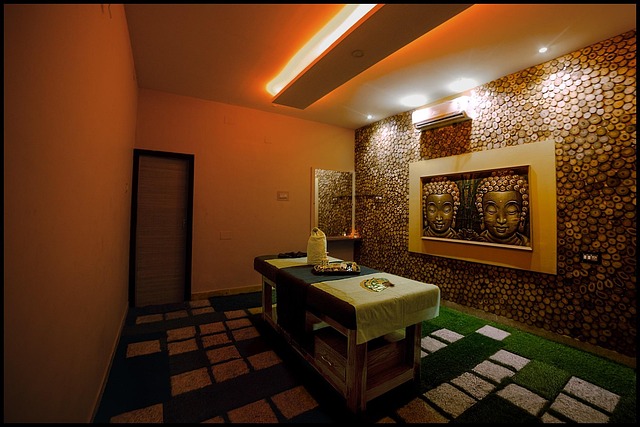
MONTEREY, CALIFORNIA (October 29, 2026) – A 46-year-old spa employee identified as Shengfeng Wang was arrested after allegedly sexually assaulting a customer during a massage at GG’s Spa and Salon in Monterey.
Monterey County officials are saying that the alleged assault was reported around 12:34 p.m. on Sunday. A woman told Monterey police that Wang sexually assaulted her during a massage, and that she immediately confronted him and called for help.
By the time officers reached the business in the 300 block of Calle Principal, Wang had already left. Around 1:40 p.m., officers found him in the 200 block of Dela Vina Avenue and arrested him without incident.
Wang was booked into the Monterey County Jail on a sexual penetration charge under Penal Code section 289(d)(4), with bail set at $100,000. Police are asking anyone with information to contact Lieutenant Ethan Andrews at (831) 646-3822, and anonymous tips can be left at (831) 646-3840.
Monterey’s city code requires any business offering massage for pay to hold a city massage establishment permit and to list every person who performs massage on that permit. Whether GG’s Spa and Salon held such a permit, and whether Wang was listed on it, are questions an injured customer would want answered.
Statewide certification can be checked through the California Massage Therapy Council, though an NBC Bay Area investigation found the council keeps details of complaints, including sexual assault allegations, out of public view. This is also not the first case of its kind in the city, as a different Monterey masseuse was convicted in 2023 of sexual battery against a visitor during a 2022 spa massage.
Liability for Monterey Spa Sexual Assault
Under California Penal Code section 289, sexual penetration is a felony when the victim is unaware of the nature of the act, including when the person committing it falsely claims the touching serves a professional purpose. Separately, Civil Code section 1708.5 gives survivors of sexual battery a civil claim against the person responsible, regardless of how a criminal case turns out. Businesses that offer bodywork can face their own responsibility under negligence principles when they hire, supervise, or keep workers carelessly. For adults, Code of Civil Procedure section 340.16 generally allows ten years from the assault, or three years from discovering a resulting injury, whichever is later, to file a civil claim. Responsibility in these cases often turns on several overlapping duties:
- Screening: Spa owners are expected to confirm certification and background before allowing anyone to massage clients.
- Permitting: Many California cities require massage businesses to hold permits naming each practitioner, and ignoring those rules can be evidence of carelessness.
- Supervision: Clear policies on draping, room access, and client check-ins reduce the opportunity for misconduct behind closed doors.
- Complaints: Earlier complaints about a worker, whether made to the business or a certifying body, can show that harm was foreseeable.
- Records: Booking logs, staff schedules, and payment records often establish who was in the room and when.
Courts have drawn careful lines on when an employer answers for a worker’s sexual misconduct. In Lisa M. v. Henry Mayo Newhall Memorial Hospital (1995), the California Supreme Court reviewed a case in which an ultrasound technician molested a patient under the pretense of performing an examination. The court held the hospital was not vicariously liable, reasoning that the technician’s conduct was not the kind of risk his employment predictably created. The ruling helps explain why claims involving intimate professional services often focus on what a business itself knew and did, such as how it screened, trained, and supervised workers. Each case depends on its own facts, and a decision about a hospital technician does not determine how any spa case will be resolved.
Why Reporting Spa Sexual Assault Matters
Sexual assault remains one of the least reported violent crimes in the country. According to Bureau of Justice Statistics data, only about 46% of rape and sexual assault victimizations in 2023 were reported to police. A separate BJS analysis covering 2020 through 2023 found the reporting rate in urban areas was just 13%. Assaults during massages can be especially hard to report, since clients may doubt themselves in a setting that involves close physical contact. People who experience misconduct during a massage have several options:
- Police: Calling 911 or the local department quickly lets officers document the scene and speak with witnesses while details are fresh.
- Medical care: A hospital or sexual assault response team can provide care and collect evidence, even before a person decides whether to pursue charges.
- Certification: The CAMTC allows the public to verify whether a massage professional is certified and to file a complaint.
- City records: Local permit offices may hold records showing whether a business and its workers were authorized to perform massage.
- Notes: Writing down the date, time, therapist’s name, and what was said can help investigators later.
Spas and wellness businesses invite customers into private rooms and ask them to trust the people working there. When that trust is broken, the questions extend beyond one worker to the systems meant to screen and supervise staff. Certification bodies, cities, and business owners each play a role in keeping clients safe. Survivors have the right to report what happened, to seek medical care, and to pursue accountability through both the criminal and civil systems. Understanding those options can help survivors make decisions on their own terms.
Investigating Spa Sexual Assault in Monterey
We at Feher Law are wishing a full recovery to the customer who was allegedly assaulted during a massage at GG’s Spa and Salon. We hope this case leads to closer oversight of who is permitted to provide massages to the public, so that no other customer is put in this position. The alleged assault raises serious safety concerns for anyone who visits a spa or salon. What checks were in place to confirm who was allowed to give massages at this business?
Have you or someone you love been sexually assaulted during a massage or spa treatment in Monterey or elsewhere on the Monterey Peninsula? California law allows survivors of sexual battery to hold both the person responsible and, in some cases, the business involved accountable, and to seek compensation for counseling, medical care, and lost income. Spa owners and their insurers usually control the booking records, staff files, and permit paperwork that show who was working and what the business knew. Our team of safety advocates and accident investigators can help you understand what happened, from certification and permit records to staffing schedules and prior complaints. If you’d like answers to legal questions or support of any kind, we’re available anytime at (310) 340-1112.