Joseph Alexander Vanzan Was Carrying a Pellet Gun When Officers From Three Agencies Opened Fire on Highway 50
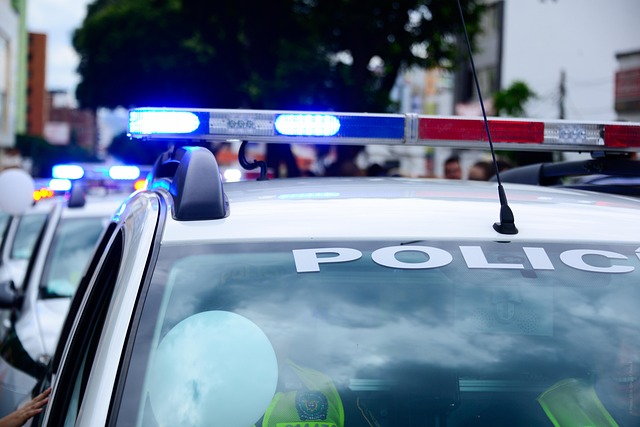
RANCHO CORDOVA, CALIFORNIA (October 30, 2026) – A 61-year-old Carmichael man identified as Joseph Vanzan was killed in a police shooting on Highway 50 near Hazel Avenue in Rancho Cordova.
Sacramento County officials are saying that the shooting occurred around 12:05 a.m. on Tuesday, September 8. Vanzan was driving a Volvo on Folsom Boulevard without its headlights on at about 11:20 p.m. the night before when California Highway Patrol officers tried to stop him, CBS Sacramento reported.
Vanzan briefly stopped before driving away, according to the CHP, and the pursuit continued through Rancho Cordova and Fair Oaks before returning to westbound Highway 50. Officers deployed spike strips, and the Volvo came to a stop on the shoulder just west of Hazel Avenue.
Officers said Vanzan stepped out of the car holding what appeared to be a gun. Officers from the CHP, the Citrus Heights Police Department, and the Sacramento County Sheriff’s Office then opened fire, and emergency responders were called to the scene.
Vanzan suffered fatal gunshot wounds. The Sacramento County Coroner’s Office later identified him, and officials reported that the object in his hand was a pellet gun, the Citrus Heights Sentinel reported.
No officers were hurt. Westbound Highway 50 remained closed for more than nine hours, and authorities have not said which officers fired or how many shots were fired.
California law generally requires agencies to release recordings of a police shooting within 45 days, which raises the question of what body camera and dash camera footage from the three agencies will show.
Pellet guns built to resemble real handguns have figured in earlier Sacramento shootings, including a 2018 case in which police said the replica carried no orange markings. With multiple agencies firing in the dark on a freeway shoulder, families may wonder whether officers had time to give commands or consider other options.
The CHP is leading the investigation, and Citrus Heights police referred questions to that agency.
Liability for Rancho Cordova Police Shooting
California holds peace officers to one of the strictest deadly force standards in the country. Under Penal Code section 835a, the Legislature has declared that officers may use deadly force only when necessary in defense of human life, judged by the totality of the circumstances. Officers must also use other available resources and techniques when it is safe and feasible to do so. Federal courts apply the Fourth Amendment’s objective reasonableness test, which asks whether a reasonable officer facing the same facts would have used the same force. Investigators and courts weighing whether a shooting was justified usually examine several factors:
- Imminent threat: The law asks whether the person posed an immediate danger of death or serious injury at the moment officers fired.
- Warnings: Officers are expected to identify themselves and warn that deadly force may be used when it is feasible to do so.
- De-escalation: Time, distance, cover, and communication may have offered safer alternatives to gunfire.
- Coordination: When several agencies respond to the same scene, unclear command and communication can contribute to unnecessary force.
- Video evidence: Body cameras, dash cameras, and aerial footage often provide the most reliable record of the final seconds.
The California Supreme Court explained how tactical choices factor into these cases in Hayes v. County of San Diego in 2013. In that case, deputies responding to a call about a suicidal man entered his home, and when he walked toward them holding a large knife, they shot and killed him. The court held that officers’ tactical conduct and decisions leading up to a shooting are part of the totality of circumstances used to decide whether deadly force was reasonable. That means the planning, approach, and positioning before shots are fired can matter as much as the instant of the shooting. This principle allows families to examine an entire encounter rather than only its final moment.
What Families Should Know After a Fatal Police Shooting
Statewide data show how often these encounters turn deadly in California. According to the California Department of Justice, officers fired their weapons in 224 reported use of force incidents in 2024, and 117 civilians died in incidents reported that year. The same report found that officers perceived 324 civilians as armed, while 280 were confirmed to be armed. That gap highlights how quickly perception can shape life-and-death decisions. Families who lose someone in a police shooting have several important rights and steps available:
- Footage access: Recordings of a police shooting generally must be made public within 45 days unless an agency shows that release would substantially interfere with an investigation.
- Autopsy records: The coroner’s findings can establish the number, location, and path of the wounds.
- State review: The Attorney General’s Office investigates police shootings that kill unarmed civilians under AB 1506.
- Claim deadlines: Claims against a public agency generally must be presented within six months under Government Code section 911.2.
- Civil rights: Federal law allows families to challenge excessive force by government officers in civil court.
Police shootings often involve several agencies, each with its own policies, training standards, and records. That complexity can make it difficult for families to learn which officers fired and why. Independent review of video, physical evidence, and witness accounts helps ensure that the official record reflects what actually happened. Communities benefit when agencies review these incidents openly and update training where needed. Families have the right to a full and honest account of how a loved one died and to pursue accountability when force was not justified.
Investigating Police Shootings in Rancho Cordova
We at Feher Law extend our deepest condolences to the family and friends of Joseph Vanzan. We hope a transparent review of this shooting brings answers and leads to changes that prevent similar deaths. A fatal multi-agency shooting on a busy freeway raises serious safety concerns for everyone involved. Were officers able to recognize that the object in his hand might not be a real firearm before they fired?
Have you or a loved one been affected by a police shooting in Rancho Cordova or elsewhere in Sacramento County? California law limits when officers may use deadly force, and families can hold agencies accountable when those limits are crossed. Several agencies may share responsibility after a multi-agency shooting, and each may offer its own version of events while it controls its own records. Our team of safety advocates and accident investigators can help you understand what happened, from body camera and dash camera footage to radio traffic and witness accounts that may differ from early official statements. If you have questions about your rights or would like a free, independent investigation, we’re here for you anytime at (424) 433-4412.