Newly Released Video Shows Thomas Johnson’s Final Minutes Before a San Diego Officer Opened Fire on Friars Road
SAN DIEGO, CALIFORNIA (November 20, 2026) – A 36-year-old man identified as Thomas Johnson was killed in a police shooting on Friars Road in the Morena district of San Diego.
San Diego County officials are saying that the shooting occurred around 3:35 p.m. on Wednesday, October 21. Thomas Johnson had been riding a Metropolitan Transit System trolley when, according to police, he argued with another passenger and then allegedly struck the trolley with an axe at the Morena/Linda Vista station, cracking a door window.
An MTS dispatcher alerted police shortly before 3:30 p.m., and officers searched the area by ground and air. About 15 minutes later, the helicopter crew spotted Johnson walking west along the south side of Friars Road near Interstate 5.
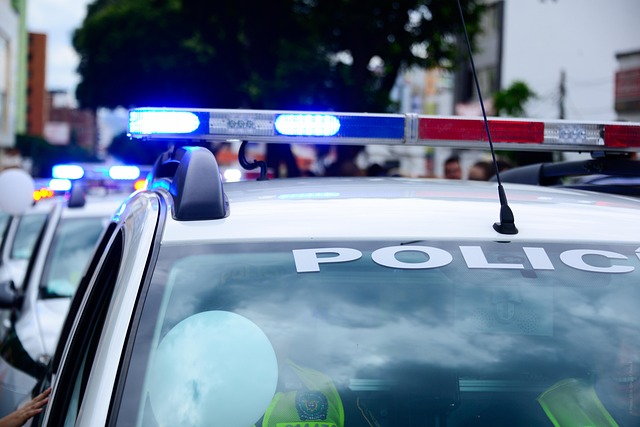
Officer Luisito Fanlo pulled over and stepped out of his cruiser with his pistol drawn, according to NBC 7 San Diego. Police say Johnson, still holding the axe, entered the roadway and moved toward the officer, who fired two rounds.
Officers and paramedics attempted lifesaving measures, but Thomas Johnson was pronounced dead at the scene around 4:10 p.m., according to Times of San Diego.
No officers were injured. Police released body camera and trolley security footage on Thursday, about a month after the shooting.
In 2024, San Diego officers fatally shot a man armed with a knife in the 5300 block of Friars Road, according to NBC 7. In May 2025, an SDPD officer shot a man who was allegedly carrying an axe near a Pacific Beach library, and that man survived, according to 10News.
A district attorney’s review of 450 county police shootings found that nearly 65% happened less than five minutes after officers arrived, KPBS reported. That raises questions about whether there was time to wait for backup, create distance, or use less-lethal tools before shots were fired.
A city audit also found that SDPD’s edited critical incident videos sometimes left out context, such as events leading up to a shooting, that appeared in the full body camera footage.
Liability for San Diego Police Shootings
California holds police to one of the nation’s strictest deadly force standards. Under Penal Code section 835a, officers may use deadly force only when they reasonably believe it is necessary to defend against an imminent threat of death or serious bodily injury to themselves or others. That judgment is measured by the totality of the circumstances, including the conduct of both the officer and the person leading up to the shooting. The law also directs officers to use other available resources when reasonably safe and feasible. Because a city is generally responsible for its employees’ acts on the job under Government Code section 815.2, several issues often shape these claims:
- Imminence: Holding a weapon is not automatically an imminent threat, so distance, movement, and reaction time matter.
- De-escalation: Investigators examine whether officers gave warnings, created space, or waited for backup when safe.
- Less-lethal options: Whether tasers or other tools were available or considered can be central.
- Crisis response: Signs of mental illness or impairment can change what a reasonable officer should do, including calling trained crisis clinicians.
- Training records: Policies, prior complaints, and training history can show whether a city prepared its officers.
California courts have made clear that what happens before an officer fires matters. In Hayes v. County of San Diego (2013), the California Supreme Court considered a lawsuit filed after sheriff’s deputies, responding to a welfare check on a suicidal man, shot and killed him when he walked toward them holding a large knife. The court held that officers’ tactical conduct and decisions leading up to a shooting are relevant in deciding whether the use of deadly force was negligent. Federal courts apply a related objective reasonableness test under the Fourth Amendment, set out by the U.S. Supreme Court in Graham v. Connor (1989).
What Happens After a Police Shooting in California
According to the California Department of Justice’s Use of Force Incident Reporting 2025, 633 civilians were involved in incidents in which officers fired a weapon or used force causing serious injury or death that year, and 127 of them died. Officers perceived 337 of those civilians to be armed, but only 279 were confirmed to be armed. That gap is one reason independent review matters, and families should understand what follows a shooting:
- Outside investigation: Many counties have a separate agency investigate each police shooting so no department reviews its own officers.
- Prosecutor review: A district attorney typically decides whether an officer’s actions were criminal, though that decision does not settle civil questions of negligence.
- Video release: Under Government Code section 7923.625, agencies generally must release recordings of a police shooting within 45 days, with limited exceptions for delay.
- Personnel records: Penal Code section 832.7 makes many records about officer shootings and serious uses of force available to the public.
- Claim deadline: Claims against a public entity for death or injury generally must be presented within six months under Government Code section 911.2.
Independent reviews and public records exist because police shootings involve the most serious power the government holds. Even so, a prosecutor’s decision not to file charges is not the final word on whether an encounter was handled with appropriate care. Families of people killed by police have the right to seek accountability through civil claims, request records, and push for policy changes. Every life lost in a police encounter deserves a full and honest accounting.
Investigating Police Shooting in San Diego
We at Feher Law extend our deepest condolences to the family and loved ones of Thomas Johnson. We hope this incident leads to a full public accounting and to changes in training and crisis response that help prevent similar deaths on San Diego’s streets. The shooting raises serious safety concerns about how officers approach people carrying weapons in public. Could anything have been done in the minutes before shots were fired to bring this encounter to a safer end?
Has someone you love been hurt or killed in a police shooting in San Diego or elsewhere in San Diego County? California law sharply limits when officers may use deadly force, and families are entitled to a full and honest account of how an encounter unfolded. In police cases, the agency involved controls much of the body camera footage, dispatch audio, and training records that show what really happened. Our team of safety advocates and accident investigators can help you understand what happened, from radio traffic and helicopter video to witness accounts that may differ from early official statements. If you have questions about your rights or would like a free, independent investigation, we’re here for you anytime at (424) 433-4412.